






EmailMarketingZone.es · April 2026 · 8 min read
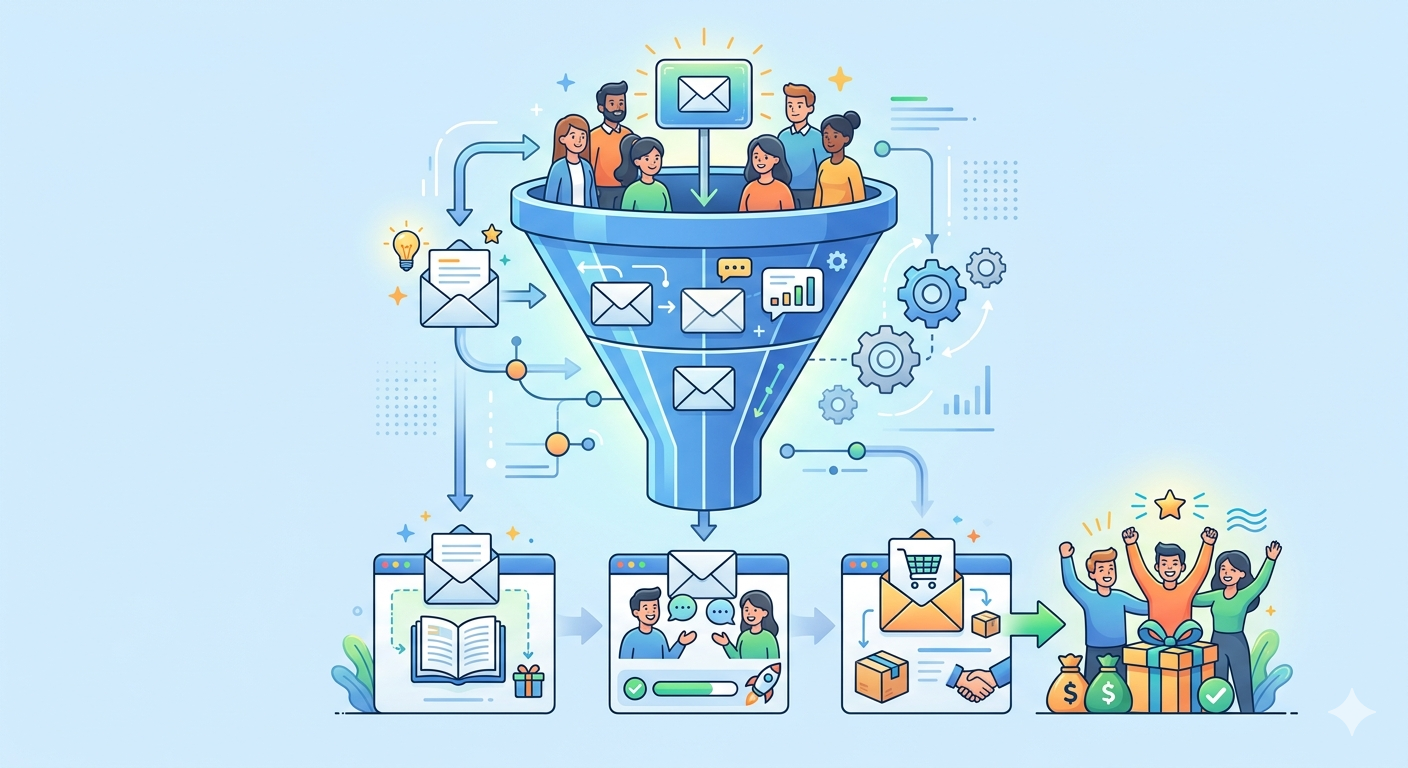
Automation is the closest thing email marketing has to a superpower. A well-built automation sequence works around the clock — welcoming new subscribers, nurturing leads, recovering abandoned carts, re-engaging dormant contacts — without you lifting a finger. Done right, it is the most powerful revenue engine a business can build. Done wrong, it is a cold, robotic series of emails that makes your audience feel like a number on a list rather than a human being worth talking to.
The difference between those two outcomes is almost entirely determined by the quality of the automation tools you use. Some platforms offer genuinely sophisticated, behavior-driven automation engines. Others dress up basic autoresponders in modern packaging and call them workflows. This guide separates the two.
«The best automation does not feel like automation. It feels like the right message arriving at exactly the right moment — because it is.»
What Makes Automation Truly Powerful?
Not all automation is created equal. The real differentiators are behavioral triggers (does the platform respond to what subscribers actually do, not just when they subscribed?), branching logic (can workflows take different paths based on subscriber actions?), and depth of integration (does automation connect to your CRM, ecommerce platform, and website behavior?). The platforms below excel across all three dimensions.
ActiveCampaign — The Industry Standard for Automation Depth
If automation is your top priority, ActiveCampaign is the benchmark every other platform is measured against. Its visual workflow builder is the most capable in the industry, offering dozens of trigger types, conditional branching, lead scoring, site tracking, CRM integration, and AI-powered send-time optimization. You can build extraordinarily complex customer journeys — the kind that adapt in real time based on subscriber behavior — without writing a single line of code. The learning curve is real, but the payoff is transformative. Plans from $29/month.
Best for: Businesses with complex customer journeys who need maximum automation power.
Klaviyo — Best Automation for Ecommerce
Klaviyo’s automation engine is purpose-built for ecommerce, and it shows. Purchase-based triggers, abandoned cart sequences, browse abandonment flows, win-back campaigns, and predictive send-time optimization are all built in and deeply connected to Shopify, WooCommerce, and other major ecommerce platforms. The behavioral data available for triggering campaigns is richer than any other platform in this space. Plans from $30/month.
Best for: Ecommerce brands who need purchase-driven automation at scale.
Moosend — Best Automation Under $15/Month
Moosend punches dramatically above its price point in automation. The workflow builder includes over 25 trigger types, multi-step conditional logic, web tracking, product recommendation automation, and abandoned cart recovery — all available from the $9/month entry plan. For small and medium businesses that need genuine behavioral automation without an enterprise price tag, Moosend is genuinely unmatched at this price level.
Best for: Budget-conscious businesses that refuse to sacrifice automation quality.
HubSpot — Best When Automation Meets CRM
HubSpot’s automation power comes from its deep CRM integration. Email automation, contact management, deal stages, task assignments, and lead scoring all operate from a single unified data set — which means your email sequences can respond to sales activity, not just email behavior. When a lead reaches a certain score, or a deal moves to a new stage, HubSpot can trigger specific email sequences automatically. For B2B businesses where sales and marketing need to move in lockstep, this is invaluable. Plans from $20/month.
Best for: B2B companies that need their email automation connected to a sales CRM.
Brevo — Best Multi-Channel Automation
Brevo extends automation beyond email into SMS, WhatsApp, and push notifications — all triggered from the same workflow builder. This cross-channel approach means a subscriber who does not open your email can receive a gentle SMS reminder, and a customer who abandons a cart on mobile can be caught by a push notification before they leave. For businesses that need their automation to span multiple channels from one place, Brevo’s breadth is hard to match. Plans from $9/month.
Best for: Businesses that want email automation connected to SMS and multi-channel workflows.
| Platform | Trigger Types | Branching Logic | CRM Integration | Price From |
|---|---|---|---|---|
| ActiveCampaign | 50+ | Advanced | Built-in | $29/mo |
| Klaviyo | 30+ | Advanced | Native ecomm | $30/mo |
| Moosend | 25+ | Yes | Via integrations | $9/mo |
| HubSpot | 40+ | Advanced | Native | $20/mo |
| Brevo | 20+ | Yes | Built-in CRM | $9/mo |
Which Automation Platform Is Right for You?
If automation depth is non-negotiable and budget is secondary, ActiveCampaign is the clear choice. For ecommerce, Klaviyo’s purchase-driven intelligence is in a category of its own. For maximum automation at minimum cost, Moosend is extraordinary value. For B2B businesses that need marketing and sales to move together, HubSpot wins. For multi-channel automation, Brevo. The right platform is the one that automates the specific moments that matter most in your customer journey.