




EmailMarketingZone.es · April 2026 · 9 min read
There is a deeply uncomfortable moment that every newsletter creator knows. You have just sent your first issue. You are proud of it — genuinely proud. You pour yourself a coffee, open your analytics, and stare at a screen that shows you the same humbling number it has shown you every day since you started: zero. One subscriber, maybe — yourself, because you tested the signup form. Perhaps three, if your mum and two loyal friends actually clicked the link you sent them on WhatsApp.
That moment feels like standing on a stage in an empty theatre. You know you have something worth saying. You simply have not found your audience yet. And the silence in the meantime feels personal, even though it is not.
The truth that successful newsletter creators will tell you — the ones who now wake up to thousands of engaged readers every morning — is that zero is not a failure. Zero is the only place any of them ever started. The difference between a newsletter that grows and one that quietly dies is not talent, luck, or the perfect niche. It is the disciplined application of a small number of strategies that work, applied with patience and relentless consistency.
Here is exactly how to grow a newsletter from zero in 2026 — step by step, without shortcuts that lead nowhere.
Step 1: Build Your Foundation Before You Chase Subscribers
Choose a specific niche and make an unmistakable promise
The most common mistake new newsletter creators make is starting too broad. A newsletter about «marketing» competes with thousands of others. A newsletter about «email marketing strategies for Shopify store owners» competes with almost none. Specificity is not a limitation — it is the most powerful acquisition tool you have. When a potential subscriber reads your landing page and thinks «this is exactly for someone like me,» they subscribe with enthusiasm rather than mild curiosity. Write your newsletter promise in one clear sentence before you send a single issue. What will readers know, feel, or be able to do after reading your newsletter that they could not before? Make that promise visible and concrete on every signup page you ever create.
Step 2: Your First 100 Subscribers Are Closer Than You Think
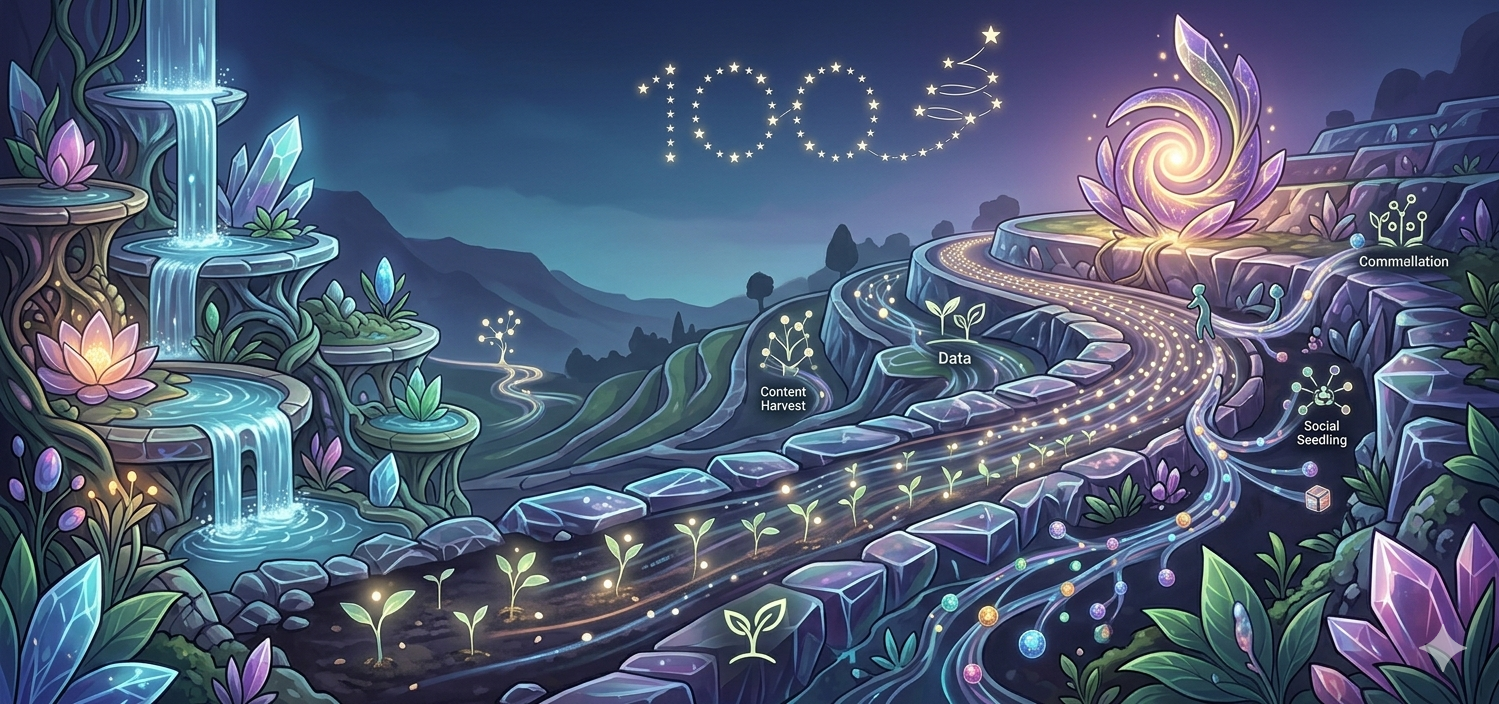
Most creators spend months agonizing over growth tactics before they have done the simplest, most effective thing available to them: telling the people they already know. Your first 100 subscribers are almost certainly already in your contact list, your LinkedIn connections, your social media followers, or your professional network. Send a personal message — not a mass broadcast, a genuine individual message — to the 20 or 30 people who would most naturally be interested in what you are building. Explain what the newsletter is, why you are creating it, and ask directly if they would like to receive it. This approach consistently generates the first 50 to 100 subscribers faster than any other method, and those early subscribers become the social proof that accelerates everything that follows.
«The fastest path to your first 100 subscribers is not a viral moment — it is twenty personal messages to people who already trust you enough to give the thing a chance.»

Step 3: Create a Lead Magnet Worth the Subscription
A lead magnet is a piece of immediately useful content — a checklist, a template, a short guide, a curated resource list — that you offer in exchange for an email subscription. The key word is immediately. The lead magnet must deliver genuine value the moment it is downloaded, before the subscriber has read a single issue of your newsletter. Weak lead magnets — generic eBooks padded to look substantial, vague guides that promise transformation and deliver platitudes — create subscriptions from people who will never open your emails again. Strong lead magnets attract precisely the right audience and create an instant sense of trust that makes the first newsletter issue feel like the natural continuation of something already valuable.
Step 4: Turn Social Media Into a Subscriber Pipeline
Social media is not your destination — it is your funnel. Post consistently on the platform where your target audience already spends time, and make every piece of content a preview of what your newsletter delivers in greater depth. Share a key insight from your latest issue as a LinkedIn post. Turn a newsletter section into a thread on X. Post the single most useful idea from your latest send as a short video. Then — every single time — make the next step effortless: link to your newsletter signup page with a clear, compelling reason to take it. The creators who grow fastest on social media in 2026 treat every post as a sample and every bio link as the door to their real community.
Step 5: Collaborate With Newsletters Your Audience Already Reads
Newsletter cross-promotions — where two creators recommend each other’s newsletters to their respective audiences — are one of the highest-quality growth channels available in 2026. A single recommendation from a newsletter with 5,000 engaged subscribers in your niche can bring you 100 to 200 new readers in a week. The audiences who arrive this way are pre-qualified: they were already reading newsletters about your topic, which means they are exactly the kind of reader who will open, engage, and stay. Reach out to newsletter creators who are slightly ahead of you in size. Propose a mutual recommendation. Most creators at this stage are delighted to collaborate because the benefit is genuinely symmetrical.
Step 6: Publish Consistently — Even When It Feels Pointless
Consistency is the most unglamorous and most powerful growth strategy available to any newsletter creator. A subscriber who receives your newsletter every Tuesday morning begins to expect it — and expectation builds habit, and habit builds loyalty. The newsletters that achieve extraordinary growth are almost never the ones with the most spectacular individual issues. They are the ones whose creators showed up, without exception, week after week, for long enough that the habit of reading them became part of their subscribers’ routine.
The consistency trap: Most newsletters die in months three and four — not because the content is poor, but because growth feels frustratingly slow at exactly the moment it is about to compound. The creators who push through this window consistently emerge on the other side to find that growth has begun to accelerate in ways the early months never suggested was possible.
Step 7: Optimise Your Signup Page Like Your Growth Depends on It
Because it does. Your signup page is the single piece of infrastructure that converts curious visitors into committed subscribers — and most creators treat it as an afterthought. Your signup page should communicate in its first five words who the newsletter is for, deliver your promise in one clear, specific sentence, show social proof if you have it (subscriber count, testimonials, media mentions), and ask for one thing only: an email address. Remove every element that is not actively working to earn the subscription. Test different headlines. Test different subheadlines. A conversion rate improvement from 20% to 35% on your signup page — achievable with a single well-tested change — doubles the value of every source of traffic you send to it forever.
Step 8: Build a Referral Loop Into Your Newsletter
Your most engaged subscribers are your most powerful growth channel — and most creators leave this entirely untapped. A simple referral program — «share this newsletter with one person who would love it and receive [exclusive content/early access/a personal thank you]» — transforms readers who already love your work into active evangelists. Platforms like SparkLoop or native referral tools built into Beehiiv and Kit make this technically simple to implement. The emotional mechanic is even simpler: people genuinely want to share things they love. Give them an easy way to do it and a small reward for doing so, and a meaningful percentage of your most engaged readers will become your most effective acquisition channel.
The compounding reality: Newsletter growth is almost never linear. The first 500 subscribers take longer than the next 500, which take longer than the 500 after that. The strategies above do not produce overnight results — they produce compounding systems that accelerate over time. Most creators who reach 10,000 subscribers report that the last 5,000 came faster than the first 1,000. Stay in the room long enough to experience that acceleration.
The Only Thing That Matters More Than Strategy
Every strategy in this guide works. The creators who have used these exact approaches have built newsletters with tens of thousands of engaged readers, meaningful revenue, and audiences that genuinely value what they create. The strategies are not the limiting factor.
The limiting factor — the only thing that actually separates the newsletters that grow from the ones that quietly disappear — is the decision to keep going when the progress feels invisible. To send issue number twelve to 47 subscribers with the same care and craft as you will send issue number one hundred to 4,700. To treat every reader, however few, as though they represent the entire audience you are building toward — because in a meaningful sense, they do.
Zero is where every great newsletter started. It is not where any of them ended. Start today. Write something worth reading. Send it to the people who need it. And then do it again next week, and the week after, until the compounding takes over and the growth begins to feel — finally, gloriously — inevitable.