

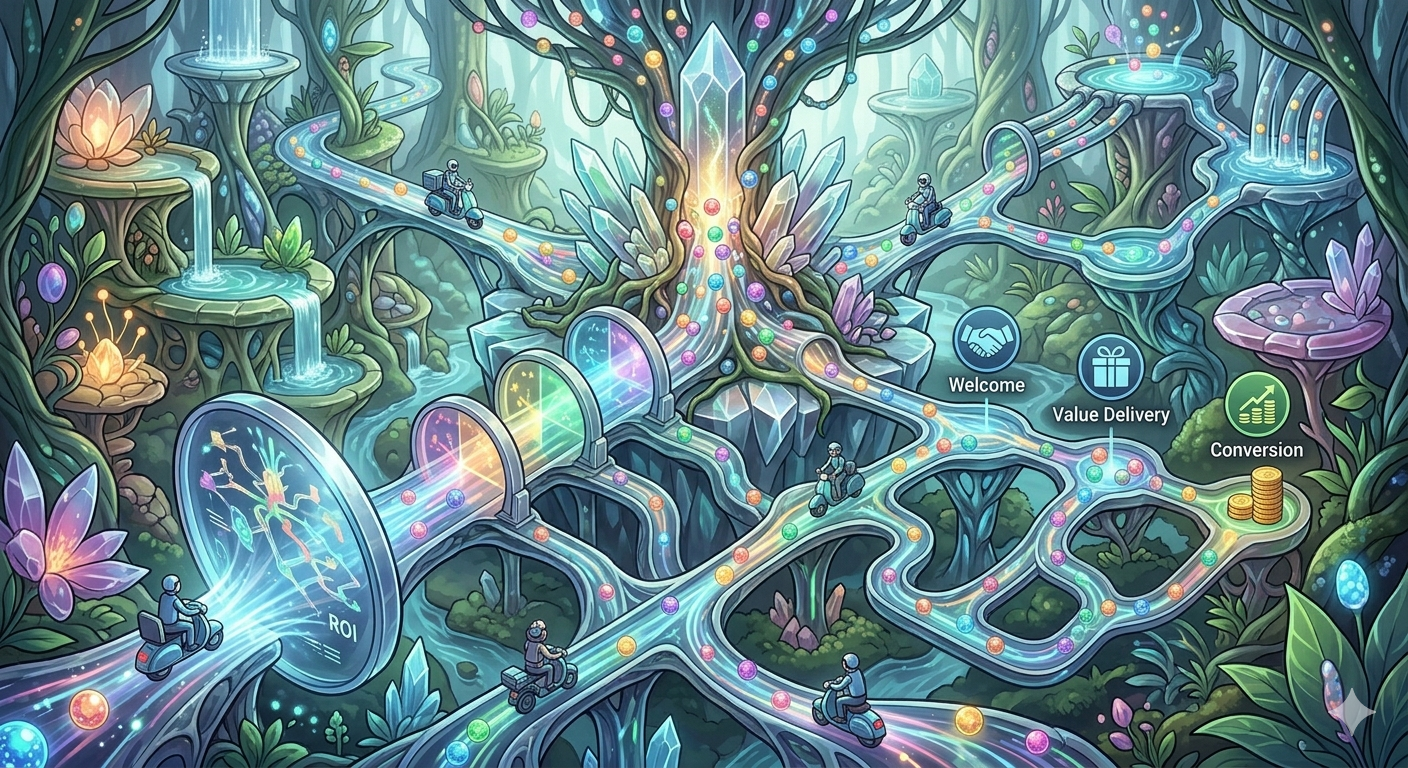
Behind every brand that seems to communicate effortlessly — always relevant, always timely, always human — there is a system of carefully designed email workflows running silently in the background. This is how you build yours.
emailmarketingzone.esApril 2025~7 min read
There is a particular kind of envy that every small business owner feels when they receive a competitor’s email at exactly the right moment — a follow-up that arrives just when they were hesitating, a re-engagement message that speaks directly to a doubt they had been quietly carrying, a product recommendation that seems to read their mind.
How do they do that? The answer, almost always, is the same: email workflows.
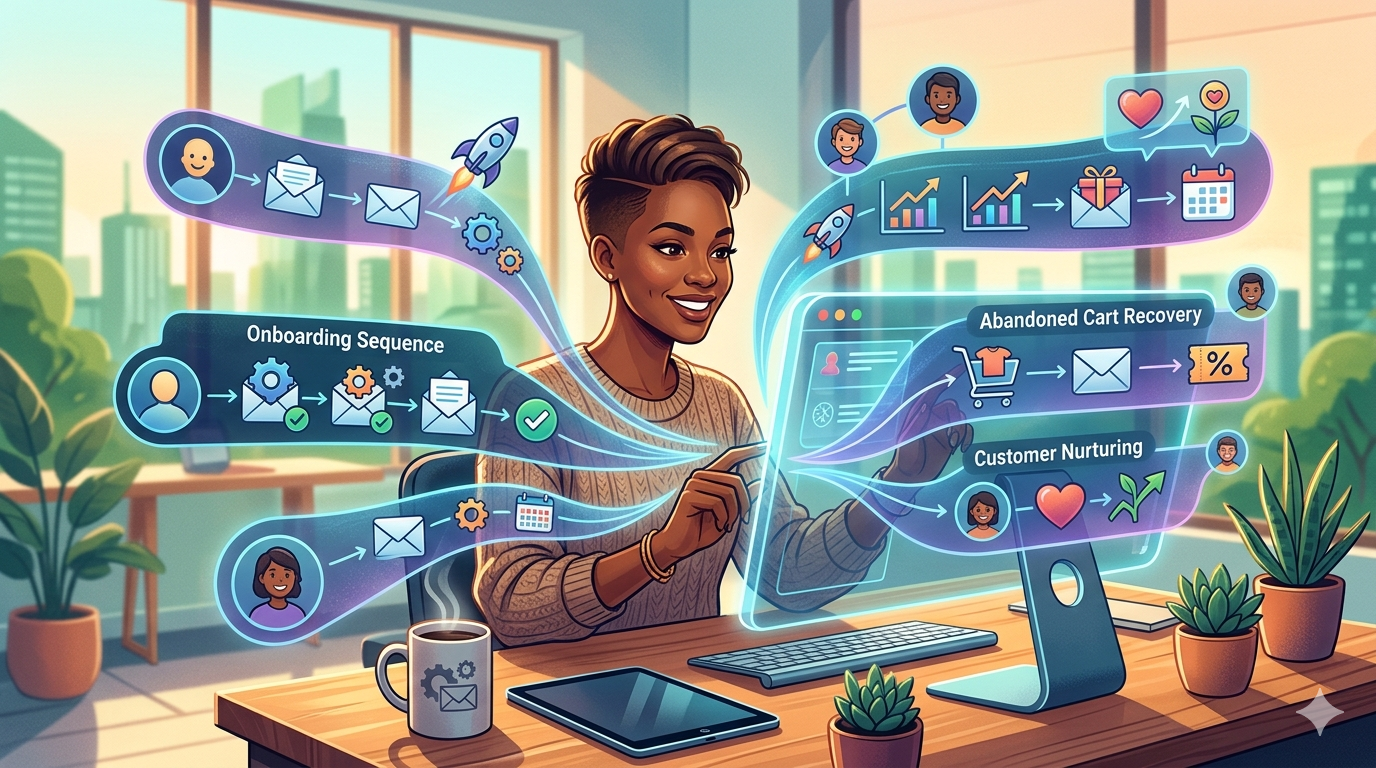
An email workflow is not just a sequence of automated messages. It is a living, intelligent system that listens to your subscribers’ behaviour, responds to their actions, and guides them through a personalised journey — without you ever lifting a finger. It is the closest thing marketing has to genuine intuition. And once you understand how to build one, your entire relationship with email marketing will change forever.
77%
of email ROI comes from segmented, targeted, and triggered campaigns
14x
higher click-through rates for behaviour-triggered emails vs. generic broadcasts
80%
of marketers using workflows report increased leads and improved conversions
What is an email workflow, exactly?
An email workflow is a branching, behaviour-driven automation — a series of emails and actions that fire based on what a subscriber does, or does not do. Unlike a simple sequence that sends the same emails to everyone in the same order, a workflow adapts. It takes different paths depending on real behaviour. It is, in essence, a conversation that your business can have with thousands of people simultaneously — and still feel one-to-one.
The key ingredient that separates a workflow from a basic sequence is the if/then logic: if someone opens this email, then send them this follow-up. If they do not open it, then send a different version with a new subject line. If they click this link, then tag them as interested in this product and move them to a new journey. Every decision point makes the communication sharper, more relevant, and more powerful.
The seven essential email workflows every business needs
You do not need dozens of workflows to build a remarkable automated marketing system. You need the right ones, built thoughtfully. Here are the seven that will have the most profound impact on your business — with their complete logic mapped out.
👋
New Subscriber Onboarding Workflow
Trigger: contact joins your main list
Build first
Immediately — Welcome email
Deliver the promised lead magnet or offer. Introduce your brand voice warmly. Set expectations for what they will receive.
Wait 1 day — Check: did they open?
Branch the workflow based on open behaviour.
✓ Opened
Send Email 2: Your brand story. A personal, honest account of why you do what you do. Build emotional connection.
✗ Not opened
Resend Email 1 with a different subject line after 24 hours. One retry — then proceed to Email 2 regardless.
Day 4 — Value email
Pure, generous content. A guide, a tip, an insight. No selling. Just proof that being on your list is worth their attention.
Day 7 — Soft introduction to your offer
Now — and only now — invite them to explore your product or service. One link. One clear, unhurried ask.
After this: tag as «onboarded» and move to regular newsletter flow
🔥
Lead Scoring & Sales Qualification Workflow
Trigger: subscriber clicks pricing page, sales page, or specific product link
Highest ROI
Immediately — Apply «hot lead» tag
The click signals serious intent. Tag them internally so your CRM or sales team can see their elevated interest level.
Wait 1 hour — Send interest-specific email
A targeted email addressing the exact product or page they viewed. Anticipate objections. Highlight the most relevant benefits. Include social proof.
Wait 2 days — Check: did they purchase?
Branch based on purchase behaviour.
✓ Purchased
Remove from this workflow immediately. Enter post-purchase onboarding workflow. Never pitch a buyer who just bought.
✗ Not purchased
Send a case study or testimonial email. Then a final urgency email 48 hours later. One clear deadline. One honest offer.
🛒
Abandoned Cart Recovery Workflow
Trigger: cart created but not purchased within 60 minutes
Avg. 10% recovery
60 minutes — Gentle reminder
No pressure. No discount yet. A warm, human nudge: «You left something behind.» Show the exact product with a clear return link.
24 hours — Social proof email
Address hesitation with real customer reviews. Answer the top 3 objections about this product. Still no discount — let the evidence speak.
48 hours — Final offer with incentive
Now offer a time-limited incentive: free shipping, 10% off, or a small bonus. Real urgency only. End the workflow after this email regardless of outcome.
Stop immediately if purchase is detected at any point
The Future of Email Marketing in 2026
🎁
Post-Purchase Loyalty Workflow
Trigger: purchase confirmed
Builds lifetime value
Immediately — Confirmation + delight
Go beyond a receipt. Express genuine excitement for them. Set expectations. Give them a reason to feel they made an extraordinary decision.
Day 3 — Onboarding and success tips
Help them get maximum value from their purchase. A guide, a video, a checklist. Customers who succeed become loyal customers. Loyal customers become advocates.
Day 10 — Review request
Ask for honest feedback while the experience is still fresh. A personal, low-pressure request. One link to your review platform.
Day 30 — Complementary offer
Introduce a related product or upgrade that genuinely enhances their experience. Not upselling. Completing the solution they already started building.
💔
Win-Back & Re-engagement Workflow
Trigger: no email opens in 90 days
Saves deliverability
Day 1 — The honest reach-out
«We noticed you’ve been quiet. Is there anything we could do better?» Vulnerability and directness work here. Offer a gift, an update, or simply an easy unsubscribe option.
Wait 5 days — Check: any engagement?
✓ Re-engaged
Remove the «inactive» tag. Move back to main newsletter flow. Send a warm welcome-back email acknowledging their return.
✗ Still silent
Send a final «this is goodbye» email. Then unsubscribe or suppress them. A clean list is worth more than a big one.
🎂
Birthday & Anniversary Milestone Workflow
Trigger: date field matches subscriber’s birthday or sign-up anniversary
Underused gem
1 day before — Anticipation email
A warm, personal message: «Something special is waiting for you tomorrow.» No details. Pure anticipation. Open rates on these are extraordinary.
On the day — The gift email
A heartfelt message with a genuine, time-limited offer. Not a generic «happy birthday» — a personal, specific celebration of this person. The discount or bonus should feel like a real gift, not a sales tactic.
3 days later — Last chance reminder
A gentle reminder that the birthday gift expires soon. Keep it warm and human. This three-email milestone workflow generates some of the highest conversion rates of any automation.
«A workflow does not replace the human behind the brand. It amplifies them — letting their care, their wisdom, and their warmth reach every single subscriber at exactly the right moment.»
The platforms that make building workflows effortless
Not all email tools handle workflows equally. These are the platforms that give you the visual workflow builders, the conditional logic, and the behavioural triggers you need to build the systems described above:
ActiveCampaign — most powerful logicKlaviyo — best for e-commerceMailerLite — best for beginnersConvertKit — best for creatorsBrevo — best valueHubSpot — best for B2BDrip — elegant mid-market
Best Email Marketing Tools
Best practices that separate good workflows from great ones
🎯
One workflow, one goal
Every workflow must have a single, clear purpose. A workflow that tries to onboard, sell, and re-engage simultaneously confuses everyone — including you. Simplicity is not laziness. It is strategy.
🚪
Always define the exit
Every workflow needs a clear exit condition. When does a subscriber leave this journey? After they purchase? After 30 days? After engaging? Without an exit, subscribers can end up trapped in workflows that no longer apply to them.
🔕
Prevent overlap ruthlessly
A subscriber who just bought from you should never receive an abandoned cart email. A new customer should never get a win-back message. Build suppression logic into every workflow — it protects your brand and your subscribers’ trust.
📊
Measure at every step
Each email in a workflow tells you something. A sudden drop in open rates at step three means that email needs rewriting. A spike in unsubscribes at step five means you pushed too hard too soon. Listen to the data as if it were a conversation.
✍️
Write for one person
The greatest risk of automation is scale without soul. Before writing each email in a workflow, picture one specific, real subscriber at that exact point in their journey. Write to them. Only them. The rest of the audience will feel it too.
🔄
Review quarterly, refine always
Workflows are not monuments. They are living systems. Every quarter, review your key automations with fresh eyes. What has changed in your business? What has changed in your audience? Great workflows evolve — and so should yours.
The golden rule of email workflows: Never let automation become an excuse for irrelevance. The moment your automated emails stop being genuinely useful to the person receiving them, they stop being marketing — and start being noise. The businesses that win with workflows are the ones that use them to be more relevant, more timely, and more human — not less.
Start building today — and start small
You do not need all seven workflows to begin experiencing the transformative power of email automation. You need one. The welcome workflow is the obvious choice — every business has new subscribers, and every new subscriber deserves a thoughtful, intentional first experience.
Build it this week. Make it genuinely good — not perfect, but good. Then watch what happens over the next thirty days as it quietly works for you: welcoming strangers, building trust, introducing your offer, and guiding real people through a journey that you designed with care.
That is the profound, underrated beauty of a well-built email workflow. You build it once. You improve it occasionally. And it works for you — honestly, consistently, and tirelessly — every single day. Even the days when you are not working at all.
That is not just smart marketing. That is freedom.