

EmailMarketingZone.es · April 2026 · 8 min read
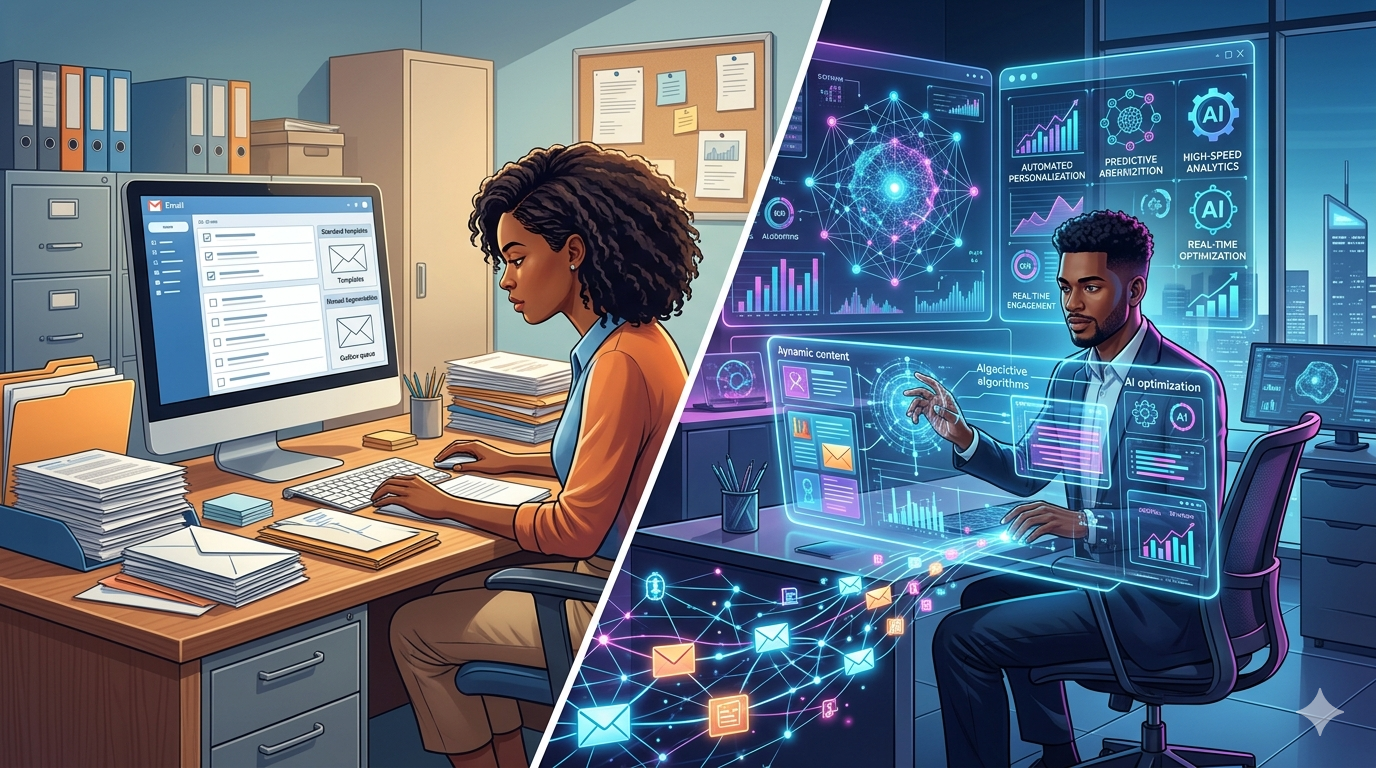
Not long ago, email marketing worked like this: you built a segment based on a few demographic fields, wrote one email for everyone in it, picked a send time based on someone else’s best practices, and hoped for reasonable results. You measured open rates the next morning, shrugged at whatever the numbers said, and started planning the next campaign. It was imperfect, slow, and built almost entirely on intuition and imitation.
AI-powered email marketing works differently. Fundamentally, structurally differently. And understanding that difference is not just academically interesting — it determines the trajectory of your results.
How Traditional Email Marketing Actually Works
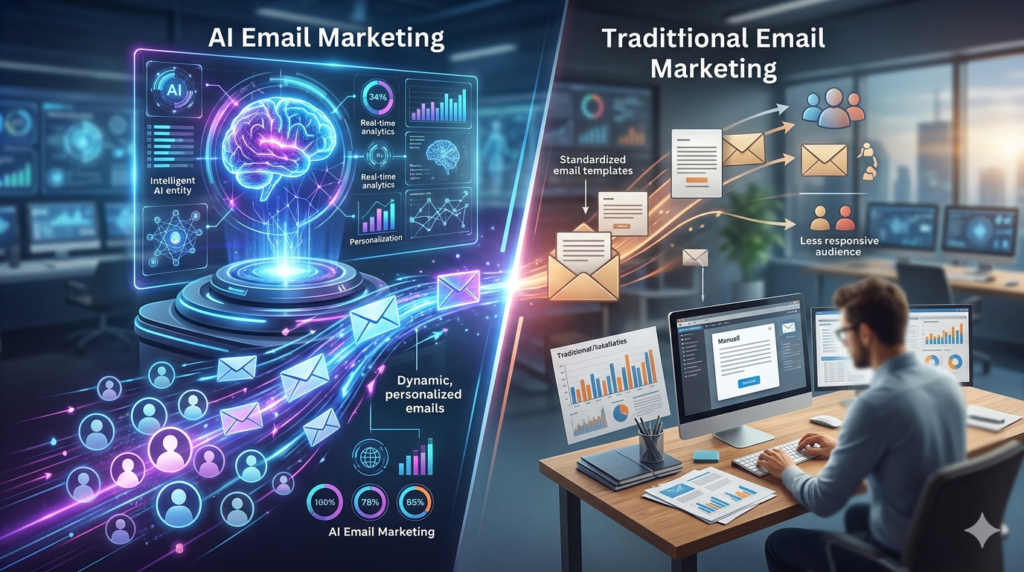
Traditional email marketing is a craft built on human judgment. A marketer decides who receives each email, what it says, when it is sent, and what the goal is. Segmentation is built on available data fields — industry, location, purchase date — rather than on observed behavior. Subject lines are written based on experience and instinct. Send times are selected based on general best practices. A/B testing happens occasionally rather than systematically. Performance is reviewed after the fact and applied — imperfectly — to the next campaign. At its best, traditional email marketing is thoughtful and effective. At its worst, it is repetitive, irrelevant, and increasingly out of step with what subscribers expect.
How AI Email Marketing Works
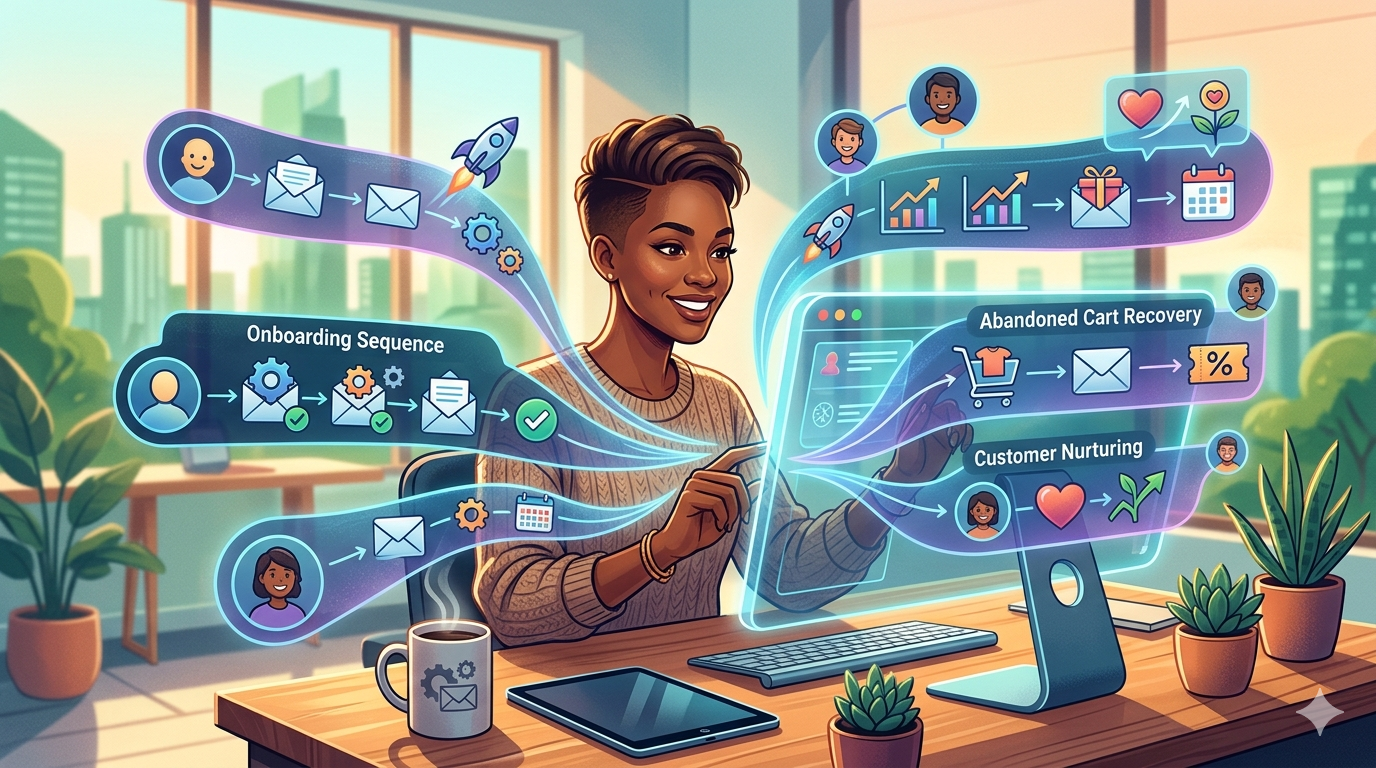
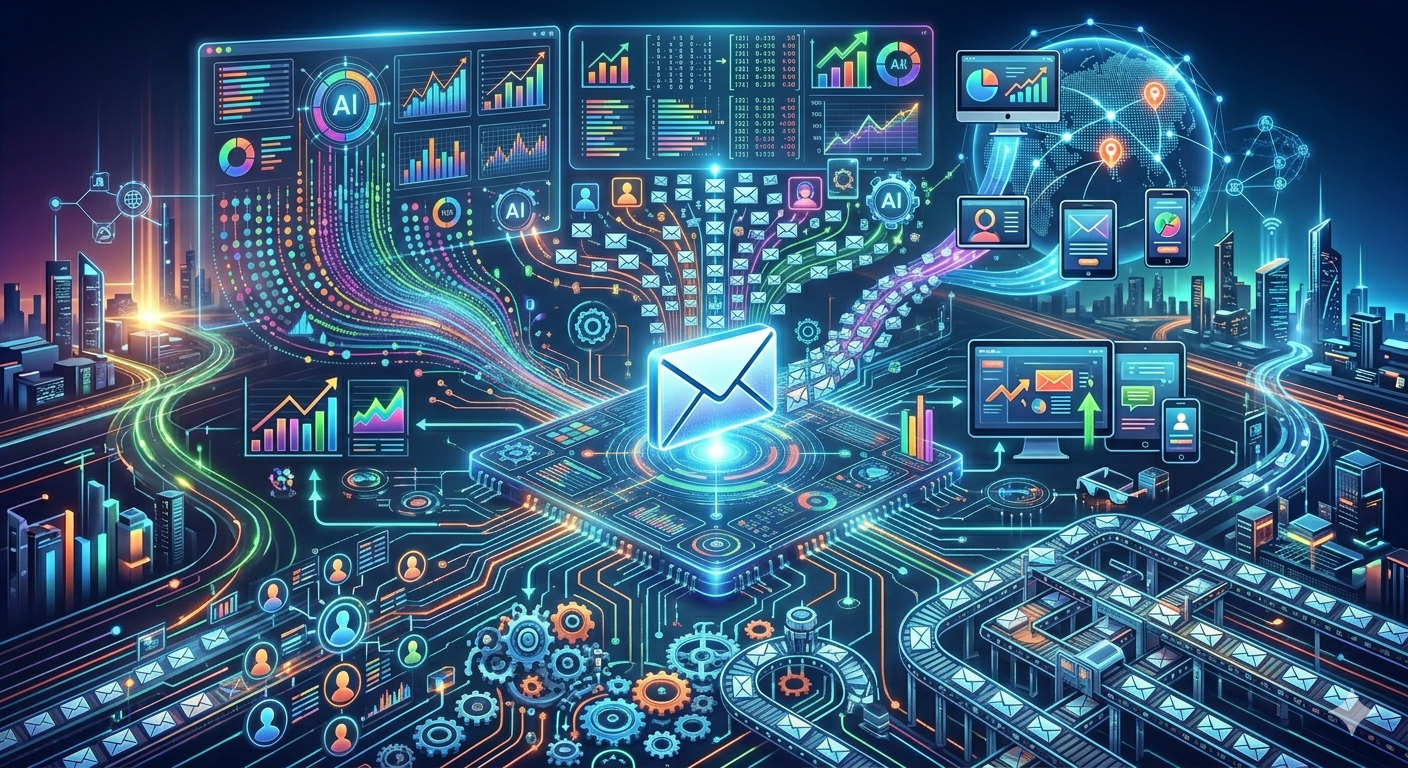
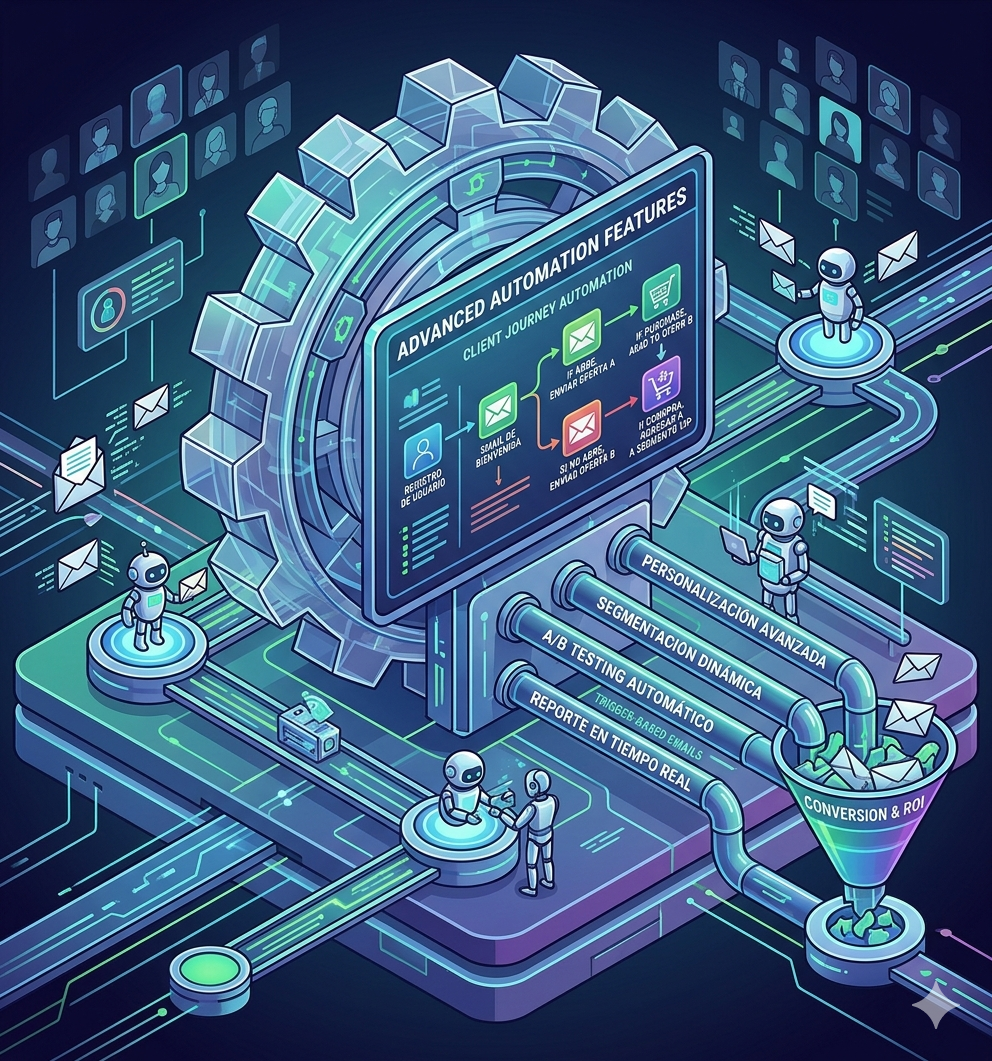
AI-powered email marketing replaces human judgment on data-heavy decisions with machine learning models that process far more signals, far more accurately, far faster than any person can. Send-time optimization learns the specific moment each individual subscriber is most likely to open an email — not based on general averages, but on their personal behavioral history. Subject line optimization draws on millions of historical performance data points to predict which approach will generate the highest opens for a specific audience. Predictive segmentation identifies which subscribers are most likely to purchase, churn, or re-engage based on behavioral patterns invisible to manual analysis. Content personalization delivers dynamically different email content to different subscribers within the same campaign based on their individual profiles.
The Results Gap
The performance gap between well-executed AI-powered email programs and well-executed traditional ones is measurable and significant. AI-driven campaigns generate, on average, 41% more revenue than equivalent traditional approaches when applied to the same list and offer. Send-time optimization alone typically improves open rates by 10-20%. Behavioral segmentation consistently outperforms demographic segmentation on every engagement metric. These are not theoretical improvements — they are documented results from businesses that have made the transition.
What Traditional Email Still Does Better
AI is not superior at everything. Human creativity, strategic instinct, brand voice, and emotional intelligence remain irreplaceable. The most powerfully resonant email campaigns in 2026 are not the ones optimized entirely by algorithms — they are the ones where a thoughtful human marketer sets the strategy, defines the voice, and makes the editorial judgments that determine what is worth saying, while AI handles the data-heavy decisions about who receives it, when, and in what form. The marketer who understands this collaboration — and who invests in developing both the human and the algorithmic dimensions of their program — consistently outperforms both pure-automation and pure-manual approaches.
The Transition: Practical and Gradual
You do not need to rebuild your entire email program overnight to benefit from AI capabilities. Most modern email platforms include AI features that can be adopted incrementally: start with send-time optimization, which requires no change to your creative process. Add AI subject line suggestions on your next campaign. Then explore behavioral segmentation for your next major campaign. Each incremental addition compounds with the others over time into a program that is meaningfully more effective than where it started.
AI does not replace the email marketer. It makes the email marketer’s judgment more effective by removing the guesswork from the decisions that data should be making anyway.
Not a Competition — A Collaboration
The frame of «AI versus traditional» is ultimately less useful than the frame of «AI-enhanced human judgment versus pure intuition.» The future of email marketing belongs to marketers who embrace AI as a powerful amplifier of their human capabilities — not as a replacement for them. The strategy, the voice, the relationship: human. The data-driven optimization of when, who, and what form: AI. Together, that combination produces results that neither approach achieves alone.