



The Complete Guide for Businesses That Want to Grow Without Burning Out
You have a list, you have a message, and you have about eleven things to do before lunch. Here is how to set up email campaigns that run themselves — beautifully, reliably, and without you.
emailmarketingzone.esApril 2025~6 min read
There is a moment every business owner reaches — usually somewhere between their third late-night email campaign and their first missed dinner — when they look at their inbox and think: there has to be a better way.
There is. And it has been sitting inside your email marketing platform this whole time, waiting for you to discover it.
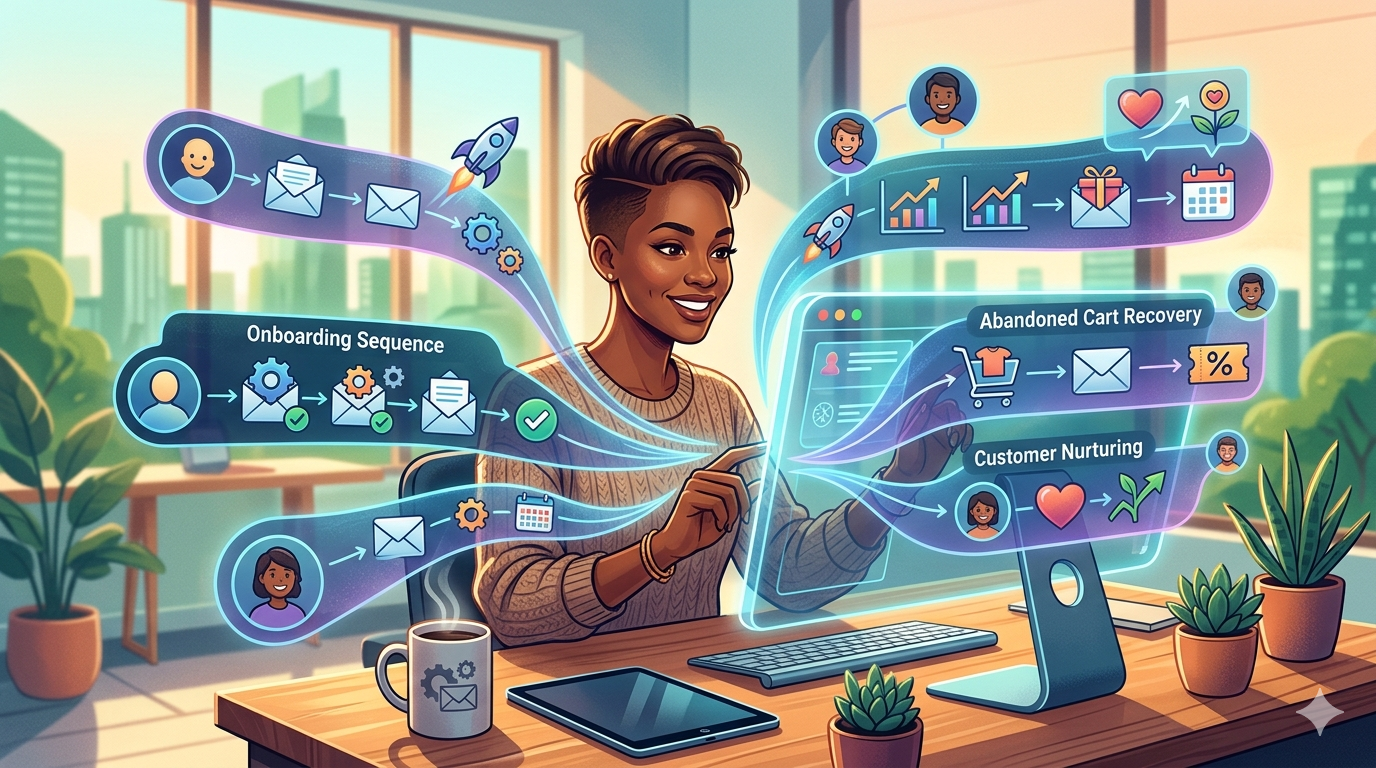
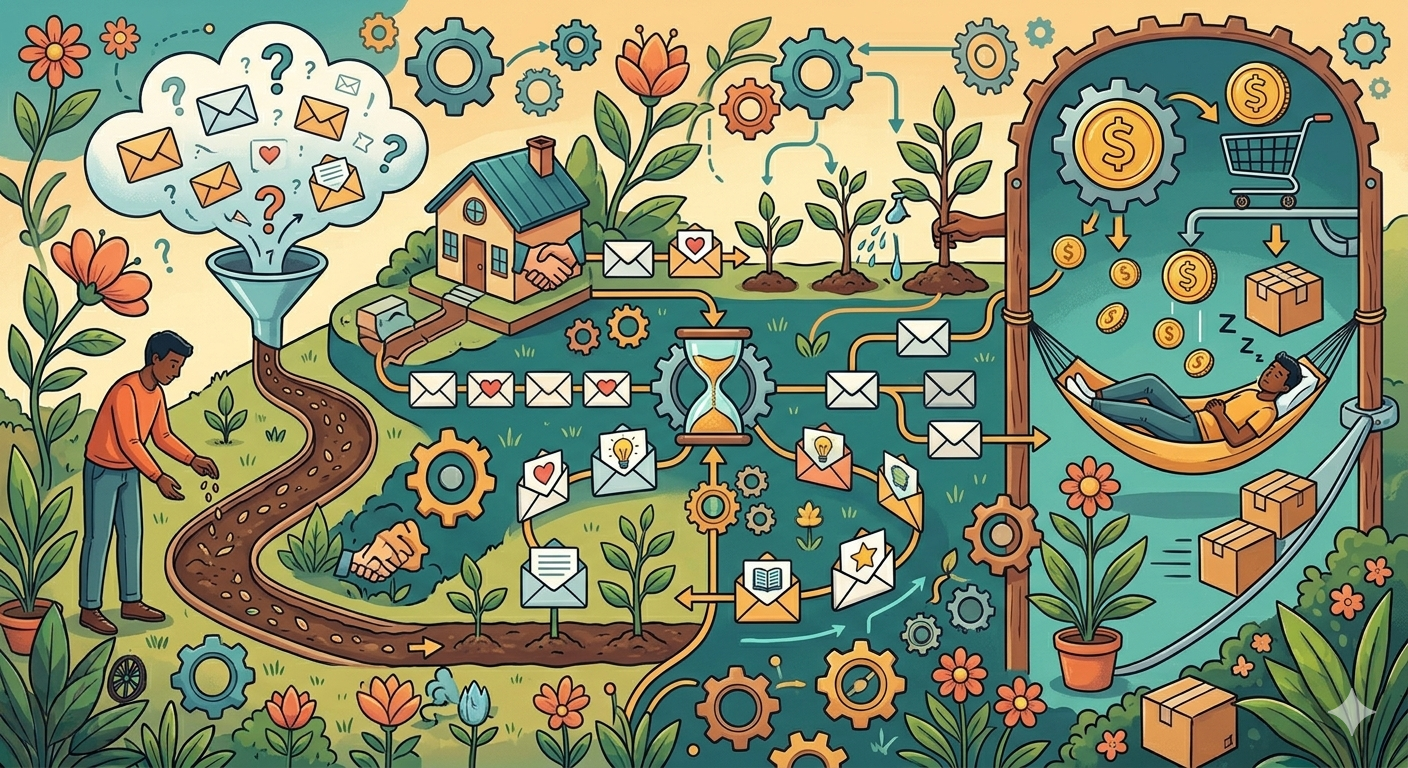
Automating your email campaigns is one of the highest-leverage decisions you will ever make for your business. Not because it saves time — though it absolutely does. But because it lets your most powerful marketing tool, your email list, work for you with the same care and consistency whether you are at your desk, on holiday, or sound asleep.
This guide will show you exactly how to do it, step by step, without overwhelm.
Why automation changes everything
Manual email campaigns are wonderful for one-off announcements and newsletters. But they have a fundamental weakness: they depend entirely on you showing up. The moment you get busy — and you will — the consistency breaks. Emails go out late, or not at all. Follow-ups get forgotten. Leads go cold.
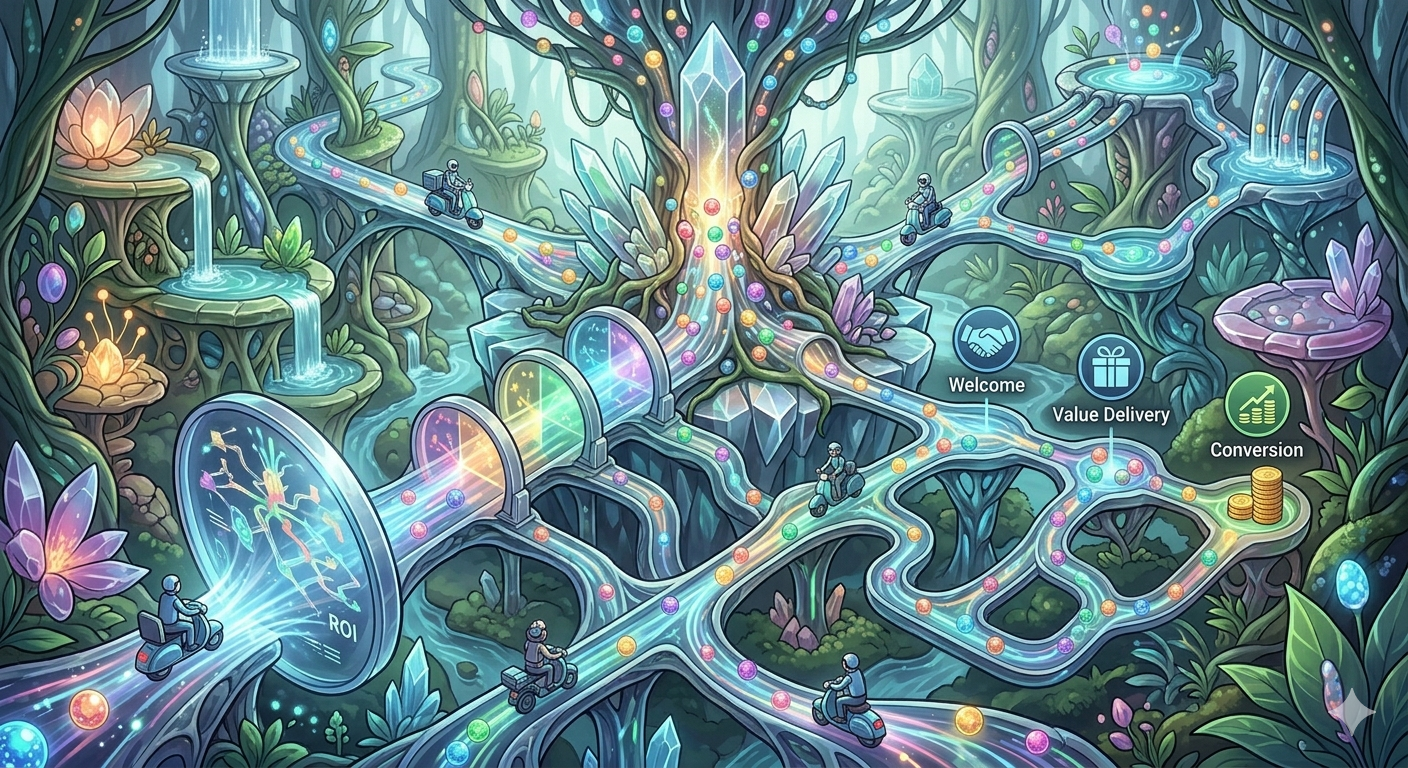
Automated campaigns do not have bad days. They do not get distracted, overwhelmed, or exhausted. Every trigger fires on time. Every sequence runs perfectly. Every subscriber receives exactly the right message at exactly the right moment — regardless of what you are doing at that particular second.
That reliability is not just convenient. It is commercially transformative.
320%
more revenue from automated emails vs. batch campaigns
70%
of marketers say automation saves them 3+ hours per week
4x
higher open rates for triggered emails vs. regular newsletters
Choose the right platform first
Not all email platforms are built equally when it comes to automation. Before you build a single workflow, make sure you are on a platform that can grow with your ambitions.
💌
MailerLite
Best for beginners. Visual builder, generous free plan, intuitive and warm.
⚡
ActiveCampaign
Best for power users. Deep logic, CRM integration, unmatched flexibility.
🛒
Klaviyo
Best for e-commerce. Revenue-driven automations, Shopify-native.
🎯
ConvertKit
Best for creators. Tag-based logic, clean sequences, beautifully simple.
🚀
Brevo
Best value. Affordable, multi-channel, great for growing lists.
🔮
Drip
Best for mid-size stores. Elegant automation with deep personalization.
The 7 steps to automating your email campaigns
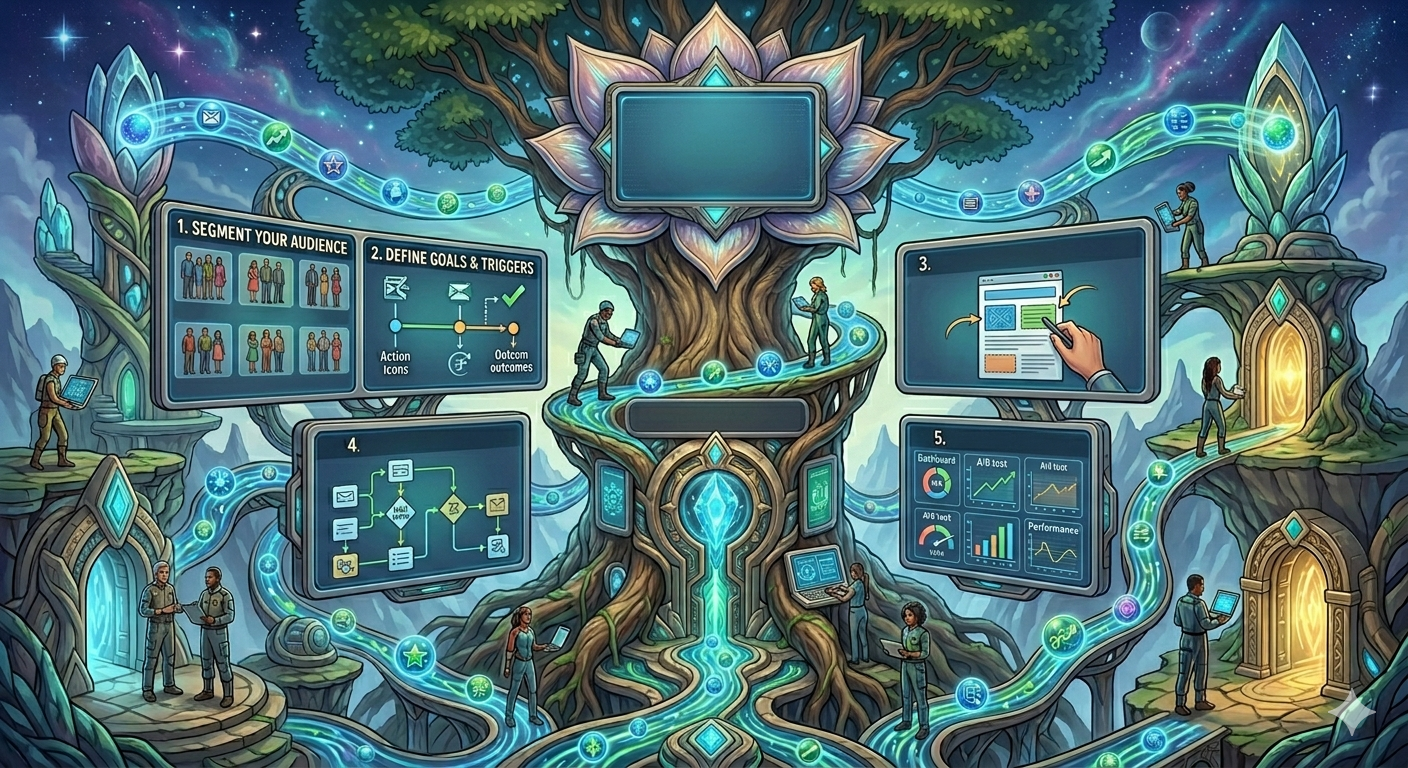
Follow these steps in order. Each one builds on the last. By the time you reach step seven, your first automated campaign will be live and working — and you will feel a quiet, satisfying pride that every marketer knows.
1
Define the goal of your automation
Before you write a single word or touch any software, ask yourself: what do I want this automation to achieve? Welcome new subscribers? Recover lost sales? Re-engage quiet readers? Every automation needs one clear, specific goal. Without it, you will build something complicated that does nothing well.
2
Map your subscriber journey on paper
Draw it out. What happens when the trigger fires? What email comes first? What happens if they open it — and what happens if they do not? Sketch every branch, every decision point, every possible path. This ten-minute exercise will save you hours of rebuilding later.
3
Set your trigger with precision
Log into your platform and define exactly what event will start this automation. A form submission, a link click, a tag being applied, a purchase, a date. Be specific. Vague triggers create confused subscribers — and that confusion erodes trust faster than almost anything else.
4
Write your emails with a human voice
This is where most automations fail. People treat automated emails like system notifications — cold, transactional, forgettable. Do the opposite. Write every email as if it is going to one specific, real person. Use their name. Be warm. Be honest. Tell a small story. The subscribers who feel seen are the ones who stay, buy, and refer others.
5
Build the sequence inside your platform
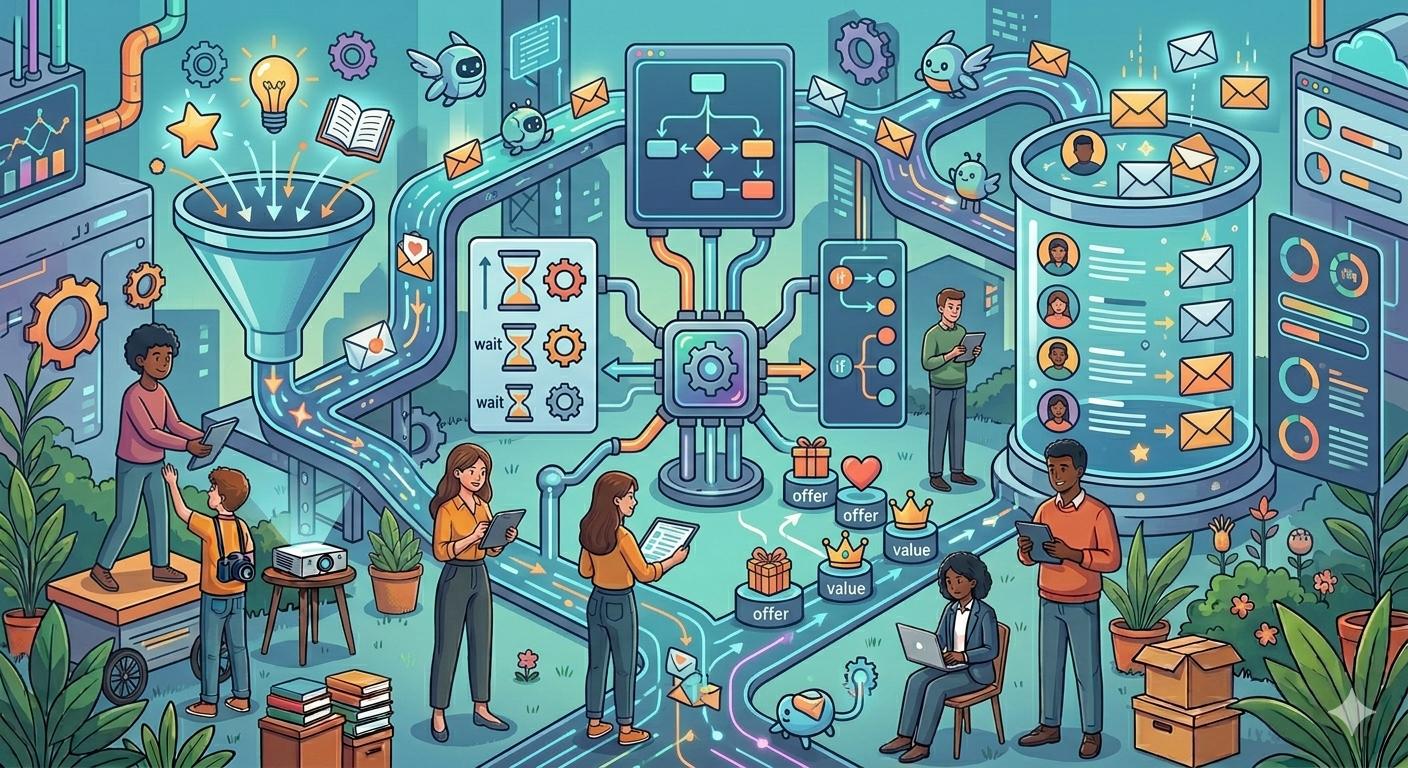
Now bring your paper map to life. Drag in your emails, set the delays between each one, add any conditional logic — «if they clicked, send this; if they did not, send that.» Most modern platforms make this feel like assembling puzzle pieces. Trust the process and build one block at a time.
6
Test the entire flow as a real subscriber
Sign up using a personal email address and go through your automation from beginning to end. Read every email fresh, as a stranger would. Check every link. Notice every delay. Fix anything that feels off, rushed, or impersonal. This step is not optional — it is the difference between an automation that converts and one that quietly damages your reputation.
7
Launch, measure, and improve continuously
Go live. Then give it 30 days to gather real data. Check open rates, click rates, conversion rates, and unsubscribes at each step. Every number tells you something. A drop in opens after email three means that email is wrong. A spike in unsubscribes means something felt pushy. Listen to the data as you would listen to a trusted customer.
Pro tip: Do not try to automate everything at once. Build your welcome sequence first. Run it for 30 days. Optimize it until it feels genuinely great. Then add the next automation. Slow, intentional building always outperforms rushed, sprawling systems that nobody really understands — including you.
«An automated campaign built with care is not less personal than one you wrote by hand. It is more consistent — and consistency is a form of love.»
The one thing most people get wrong
They automate the sending but forget the thinking. They set up a sequence, switch it on, and walk away forever. Three months later, the same emails are going out to a completely changed audience — and the results have quietly deteriorated without anyone noticing.
The businesses that win with email automation are the ones that treat their sequences as living things. They review them quarterly. They update them when their offer changes. They rewrite the emails that are underperforming. They add new branches as they learn more about their audience.
Automation is not a machine you build and forget. It is a relationship you tend. The moment you treat it that way, everything improves — your open rates, your conversions, and most importantly, the genuine connection you have with the people on your list.
Start today. Start small. Start with intention. The version of your business that runs on beautiful, thoughtful, perfectly timed automated emails is closer than you think.