


EmailMarketingZone.es · April 2026 · 8 min read
There is a moment every email marketer knows all too well. You have spent hours — sometimes days — crafting a campaign. The subject line feels sharp. The copy flows. The design looks clean. You hit send. And then you wait. Hoping. Wondering if this time, this email, will be the one that actually lands.
That feeling of uncertainty — that quiet dread of pouring your energy into something and not knowing if it will connect — is one of the most frustrating parts of email marketing. And for a long time, there was no real solution. You guessed. You tested. You hoped.
Artificial intelligence has changed that equation in a profound and irreversible way. Not by removing the creativity or the human instinct from the process, but by eliminating the guesswork that always surrounded it. In 2026, AI does not replace the marketer — it makes the marketer unstoppable.
340%
increase in marketers using AI for email campaigns in the last two years
6%
of teams now need more than two weeks to produce one email, down from 62%
41%
more revenue generated by AI-powered campaigns vs. traditional approaches
The Problem with Email Marketing Before AI
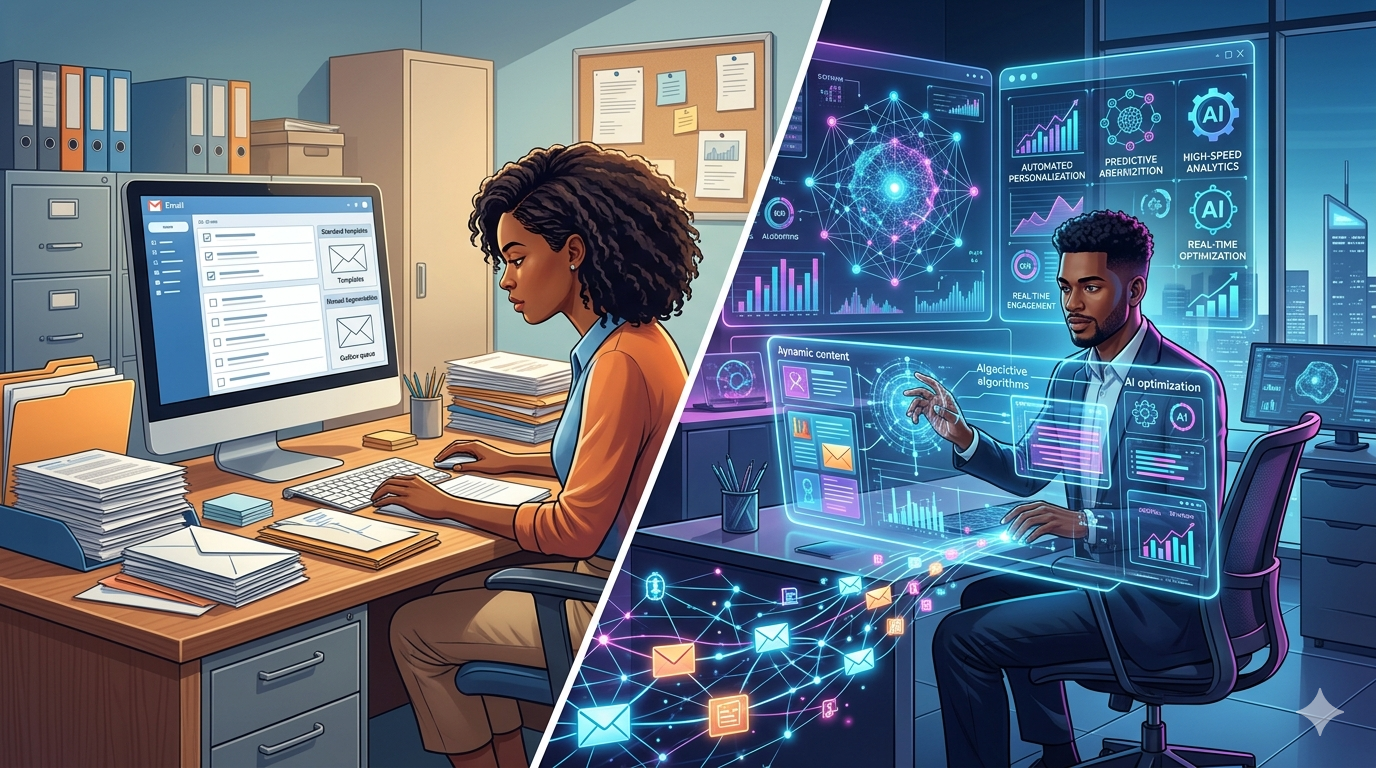
Be honest for a moment. Before AI, how did you decide when to send your emails? You probably picked Tuesday morning because someone told you that was best. How did you write your subject lines? You brainstormed a few ideas, went with your gut, and hoped for the best. How did you segment your list? Maybe by location, or by whether someone had purchased before — blunt, broad categories that could never capture the complexity of a real human being.
The painful truth is that traditional email marketing was built on assumptions. You treated 10,000 different people as if they were one person, sent them the same message at the same moment, and then wondered why your open rates felt disappointing. It was not your fault. It was a limitation of the tools available — not the passion behind the work.
«You were not failing at email marketing. You were simply fighting blind, without the data and intelligence that your campaigns desperately needed.»
AI does not just improve on those old methods. It makes them obsolete. Here is how.
1. AI Knows Your Subscribers Better Than You Do
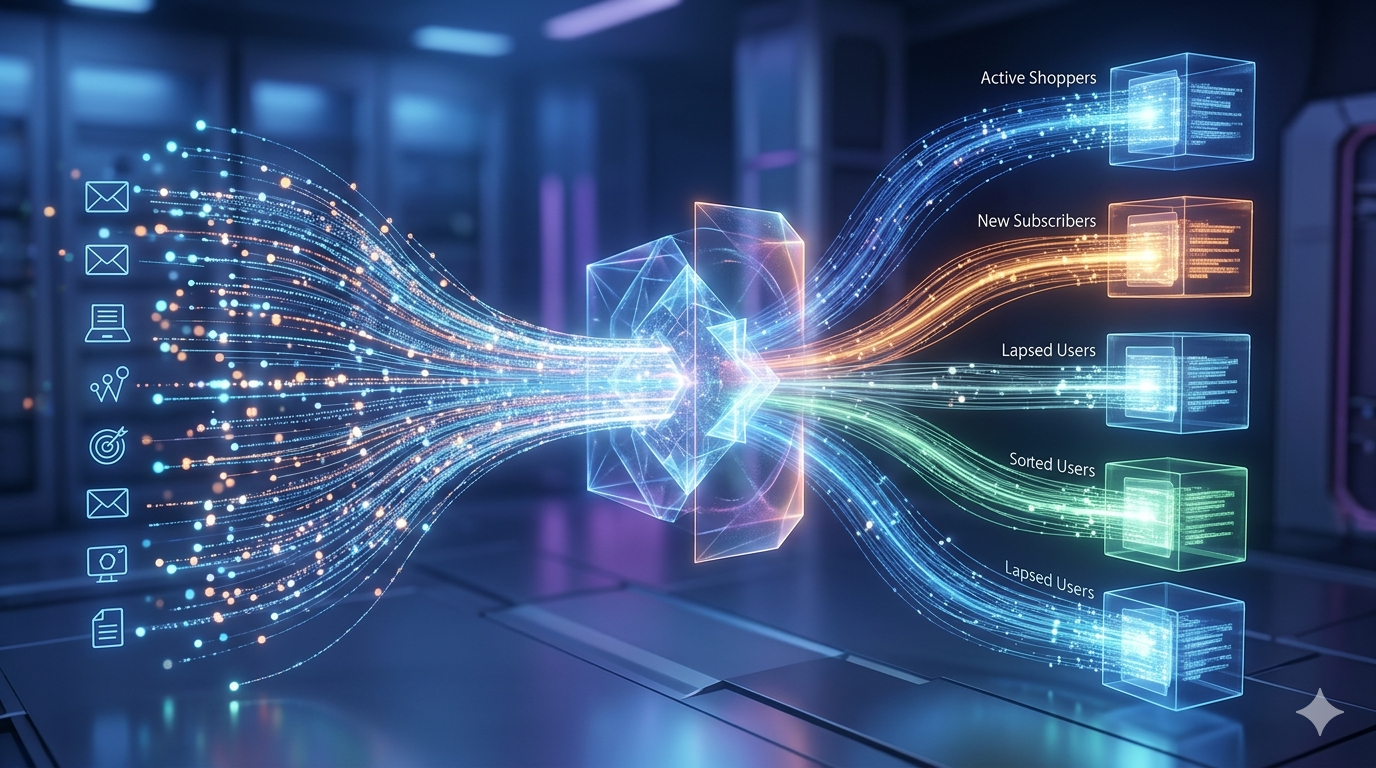
This might feel uncomfortable to hear, but it is true — and it is a gift. No human marketer, no matter how talented or dedicated, can hold the full behavioral history of thousands of subscribers in their head simultaneously. They cannot see, in real time, that subscriber number 4,782 always opens emails on Sunday evenings, gravitates toward product recommendations over promotional discounts, and has been quietly browsing the same product page three times this week without buying.
AI can. And it acts on all of that information — automatically, instantly, at a scale that is simply beyond human capacity.
Modern AI-powered platforms analyze purchase history, browsing behavior, past email interactions, and engagement patterns to build a deep, nuanced understanding of each individual subscriber. The result is not just personalization in the shallow sense of adding a first name to a subject line. It is genuine relevance — emails that feel like they were written specifically for that one person, because in a meaningful way, they were.
Subscribers notice the difference. They feel seen rather than targeted. Valued rather than marketed to. That emotional shift — from feeling like a number on a list to feeling like a human being who is understood — is what drives the open rates, the click-throughs, and the conversions that make email marketing worth doing.
2. AI Sends Your Emails at the Perfect Moment
Timing is one of the most underappreciated forces in email marketing. The same email, sent at two different times of day, can have dramatically different open rates. Not because the content changed — because the moment it arrived in someone’s inbox changed.
Think about your own inbox behavior. There are moments when you are genuinely open to reading something new, something unexpected, something that pulls you in. There are other moments — rushed mornings, exhausting afternoons, distracted evenings — when you scroll past everything without really seeing it. The emails that catch you in the right moment feel like serendipity. The ones that miss the window disappear without a trace.
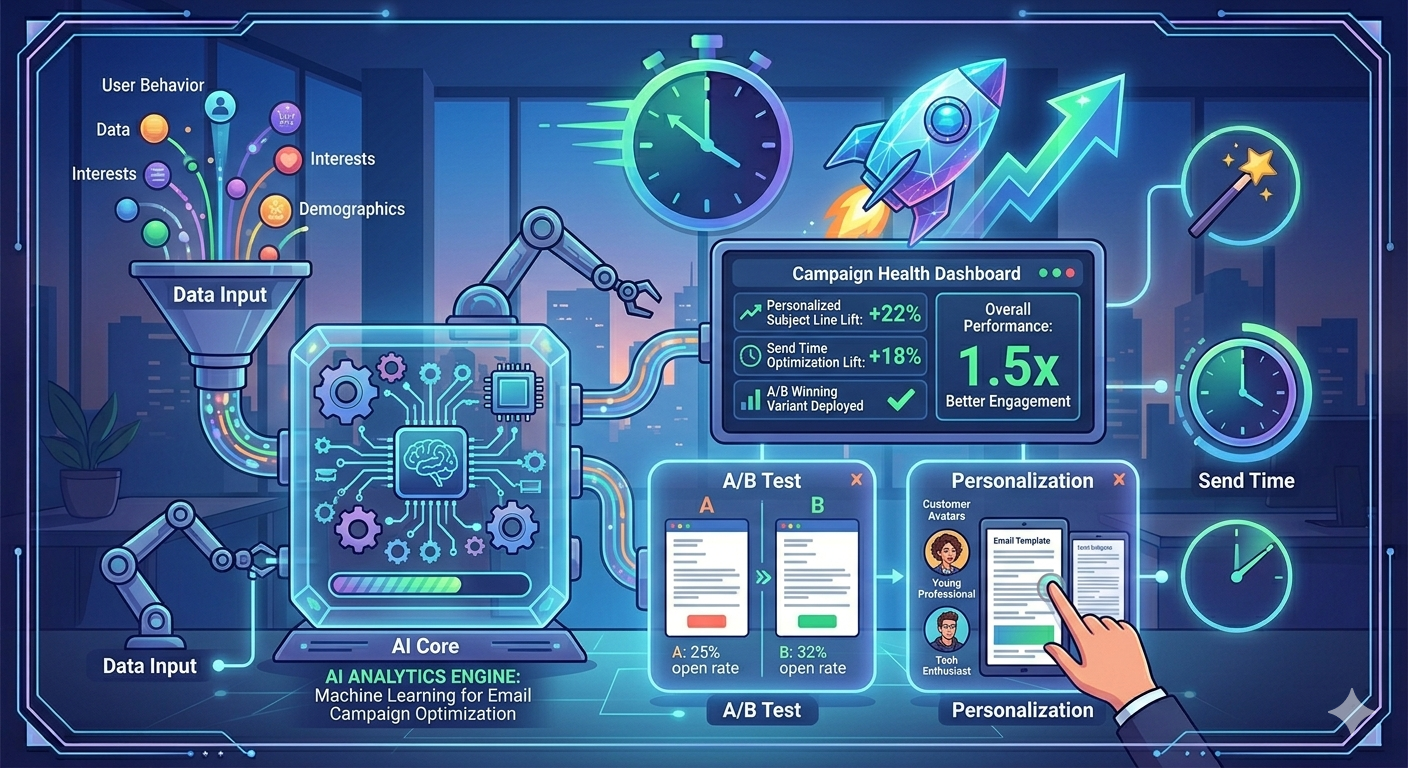
AI-powered send-time optimization removes the guesswork from this entirely. Instead of sending your campaign to everyone at 10am on Tuesday, the system learns the specific moment each individual subscriber is most likely to open an email — and delivers it precisely then. Not to a segment. Not to a demographic group. To each individual person, based on their own unique behavioral pattern.
The impact is not subtle. Campaigns using AI-driven send-time optimization consistently outperform fixed-time sends across every key metric — open rates, click-through rates, and conversions. The email does not change. The moment it arrives does. And that moment is everything.
3. AI Writes Subject Lines That People Actually Open
Subject lines are brutal. You have somewhere between two and five seconds to stop someone mid-scroll, to make them feel curious or compelled or delighted enough to open what you have sent. Most subject lines fail that test. They are either too generic to register, too salesy to trust, or too clever to be understood.
AI approaches this problem with something human writers cannot fully replicate: an encyclopedic knowledge of what has worked, what has failed, and why — across millions of campaigns, industries, and audience types. It identifies the patterns that consistently drive opens. Short versus long. Questions versus statements. Urgency versus curiosity. Emotional triggers versus rational ones.
More importantly, it learns from your specific audience. A subject line that electrifies one subscriber base might land completely flat with another. AI tailors its suggestions based on the behavioral data from your list — not generic best practices from someone else’s campaign. The result is subject lines that feel less like marketing and more like a message a friend would send. And those are the ones that get opened.
4. AI Predicts What Will Happen Before It Happens
One of the most quietly astonishing capabilities of modern AI is predictive analytics — the ability to look at existing data and forecast future behavior with unsettling accuracy. Who is likely to buy in the next 30 days? Who is on the verge of going quiet forever? Who is a loyal customer who would respond extraordinarily well to an exclusive offer?
Before AI, these questions were impossible to answer with confidence. Now, they are answerable before you even compose a single word.
This shifts email marketing from a reactive discipline — sending campaigns and waiting to see what happens — into a proactive one. You reach customers before they churn, not after. You reward loyalty before it fades, not once it is already gone. You catch the subscriber who is wavering and give them exactly the reason they needed to stay. That is not just better marketing. That is a fundamentally different and more human relationship with your audience.
5. AI Turns Failures Into Fuel
Every campaign that underperforms used to feel like a small defeat. You analyzed the numbers, shrugged, and hoped the next one would do better. The data was there, but making genuine sense of it — understanding the real reasons behind a low open rate or a poor click-through — required time and expertise that most teams simply did not have in abundance.
AI learns from every single email you send. A campaign that falls flat is not a disappointment — it is a dataset. The system identifies what went wrong, adjusts its understanding of your audience, and applies those lessons automatically to the next campaign. Over time, your emails do not just improve incrementally. They compound. Each send makes the next one smarter. Each failure makes the next one more likely to succeed.
«In email marketing powered by AI, there are no wasted campaigns. Every send — good, bad, or unremarkable — makes your strategy sharper and your connection with subscribers deeper.»
The Shift That Changes Everything
Perhaps the most profound thing AI has done for email marketing is not technical at all. It is emotional.
For years, subscribers have been trained to distrust marketing emails. To skim over them, to delete them reflexively, to tune them out the way we tune out background noise. That distrust was earned — because for too long, email marketing prioritized volume over relevance, convenience over genuine connection.
AI makes relevance possible at scale. It makes genuine connection achievable for a list of 50,000 people with the same care and intentionality you would bring to a list of 50. When subscribers receive emails that actually speak to them — that acknowledge who they are, what they care about, and where they are in their relationship with your brand — something shifts. The delete reflex softens. The scrolling slows. The trust begins to rebuild.
That trust is the most valuable thing in email marketing. It always has been. AI is simply the most powerful tool ever built for earning it.
You Cannot Afford to Wait
The gap between brands using AI in their email campaigns and those still operating on intuition and guesswork is already wide — and it is widening every month. The marketers who adopted AI early are not just getting better results. They are building deeper relationships with their audiences, compounding improvements over time, and pulling ahead in ways that are genuinely difficult to close.
The good news is that getting started has never been more accessible. The platforms exist. The tools are ready. The only thing missing is the decision to stop guessing and start knowing. Your subscribers deserve emails that feel like they were made for them. AI makes that possible. And the time to start is right now.