




You do not need a degree in copywriting, a background in marketing, or ten years of experience to write emails people love. You need honesty, a little structure, and the courage to simply begin.
emailmarketingzone.esApril 2025~6 min read
There is a paralyzing moment that almost every new email marketer knows intimately. You have your list set up. You have your platform ready. You sit down to write your first email — and nothing comes. The cursor blinks. Your mind goes blank. A quiet, relentless voice whispers: who am I to be writing this? I have no idea what I am doing.
That voice is lying to you. And this article is going to prove it.
The truth is that the most effective marketing emails in the world are not written by brilliant copywriters with decades of experience. They are written by people who deeply understand their audience, speak to them honestly, and say one useful, relevant thing at a time. That is something you can do right now — today — with exactly the experience you currently have.
Let’s start by dismantling the myths that are keeping you stuck.
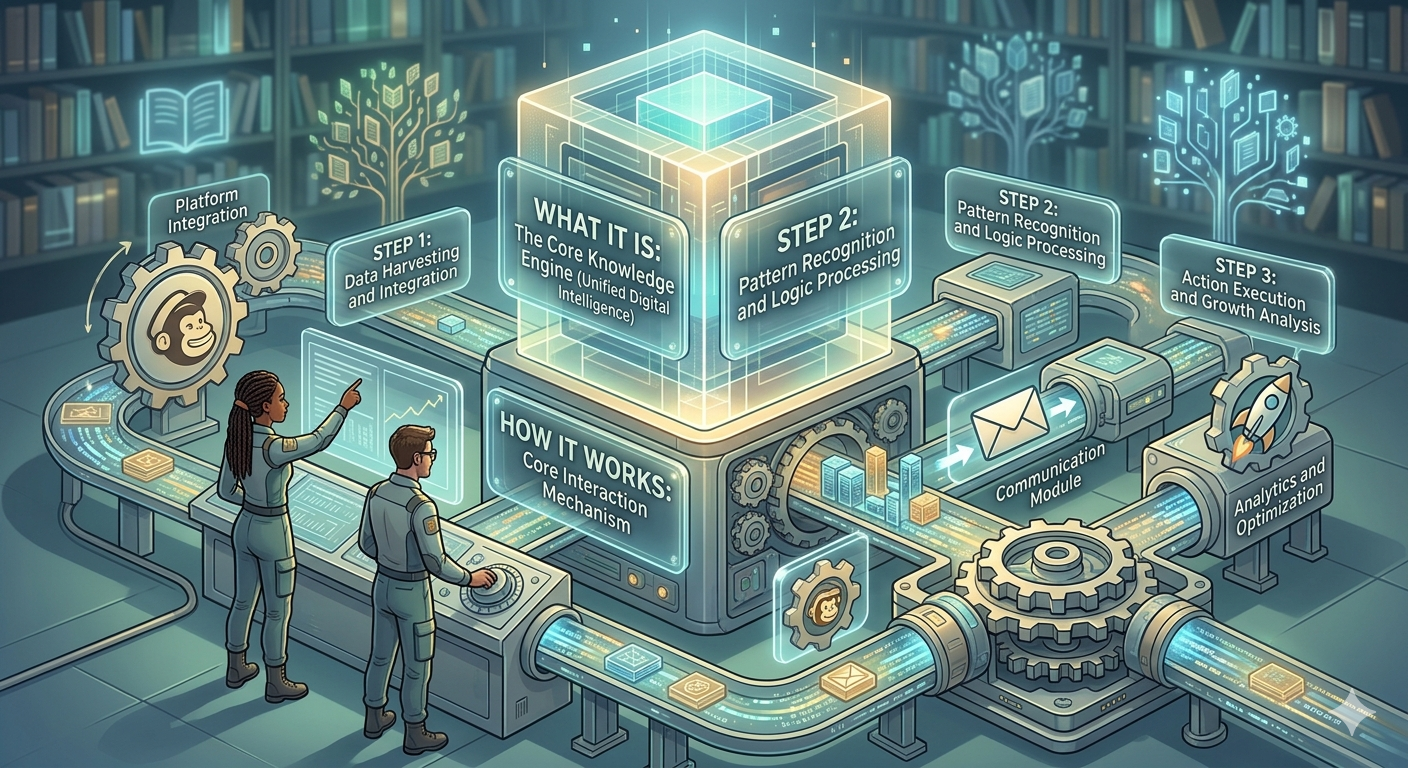
What It Is and How It Works
The myths that are stopping you before you start
✗ Myth
«I need to be a good writer to send great emails.»
✓ Truth
You need to be a good communicator. Those are completely different skills — and you already have one of them.
✗ Myth
«My emails need to sound professional and polished.»
✓ Truth
The most opened, most replied-to emails sound like a real person wrote them — warm, direct, and slightly imperfect.
✗ Myth
«I need to write something impressive every time.»
✓ Truth
You need to write something useful every time. Impressive is forgettable. Useful gets saved, shared, and replied to.
✗ Myth
«If I make a mistake, people will unsubscribe.»
✓ Truth
People unsubscribe from emails that bore them. Authentic mistakes — owned gracefully — actually build trust.
Understand what an email is actually made of
A great marketing email is not a mysterious, complex piece of persuasive art. It is a simple structure with five working parts — each one with a specific job to do. Master these five parts and you can write any email, for any purpose, at any time.
Subject
The subject line — your one shot at the inbox
The only job of the subject line is to earn the open. It must create enough curiosity, urgency, or relevance that the reader stops scrolling and clicks. Keep it under 50 characters. Make it feel personal. Never mislead.
«The email mistake costing you opens» / «Quick question for you» / «This changed how I think about pricing»
Preview
The preview text — the subject line’s best friend
The 40–90 characters visible in the inbox after the subject line. Most people ignore this. Do not be most people. Use it to extend the curiosity of your subject line or add a second hook. It can meaningfully lift your open rate.
Subject: «The email mistake costing you opens» → Preview: «I made it for three years before I noticed.»
Opening
The opening line — the hook that holds them
The first sentence must earn the second. Start with a story, a bold claim, a surprising statistic, or a question that speaks directly to your reader’s reality. Never start with «I hope this email finds you well.» It never does.
«Three months ago I almost deleted my entire email list. Here is what stopped me — and what I learned.»
Body
The body — one idea, explored with care
The most important rule in email copywriting: one email, one idea. Not three tips, not five strategies, not a roundup of everything on your mind. One thing. Explored with depth, honesty, and relevance. Short paragraphs. Active voice. White space. Human language.
If you find yourself writing «and also…» for the third time, stop. Save that idea for next week’s email.
CTA
The call to action — one clear next step
Tell your reader exactly what to do next. Click this link. Reply with your answer. Book a call. Read this article. One action per email — never two. The reader who is given two options too often chooses neither.
«If this resonates, I would love to hear your story — just hit reply.» / «Ready to try this? Start here →»
Sign-off
The sign-off — your lasting impression
End as you began — warm, human, and personal. Sign with your real name. Add a postscript (P.S.) if you have something extra to say — postscripts are read almost as often as subject lines, making them one of the most valuable pieces of real estate in any email.
«P.S. — If you have been sitting on an idea for your first email, this is your sign. Send it. Done beats perfect, every single time.»
The beginner’s writing formula that works every time
When you do not know where to start, use this structure. It works for welcome emails, newsletters, promotional emails, and follow-ups alike. Once it becomes instinctive, you will not need it anymore — but until then, it is your safety net.
The P.A.S.T.A. Formula for Email Beginners
PProblem — Open by naming a real, specific problem your reader faces. Not a general one. A specific, painful, familiar one. This is how you make them feel immediately understood.
AAgitation — Briefly explore why this problem matters and what it is costing them. Not to make them feel bad — to make the solution feel genuinely worth their attention.
SSolution — Present your insight, tip, or answer clearly and directly. This is the heart of your email. Be generous. Give the real answer, not a teaser for something behind a paywall.
TTransformation — Paint a brief picture of what changes when they apply this. Not a grand promise — a realistic, honest glimpse of the better version of their situation.
AAction — End with one clear, specific, low-friction next step. Make it feel like the most natural thing in the world to do after reading this email.
«You do not need the perfect words. You need the honest ones. Your reader can feel the difference — and they will love you for it.»
Before and after: what bad emails look like — and how to fix them
The fastest way to improve your writing is to see the difference between what most people write and what actually works. Here are the most common beginner mistakes — and exactly how to fix each one.
✗ Before
«I hope this email finds you well. I wanted to reach out to share some exciting updates about our company and the new products we have been working on.»
✓ After
«Six months ago, we made a decision that scared us. We scrapped our bestselling product and rebuilt it from scratch. Here is why — and what we learned.»
✗ Before
«In this week’s newsletter, we will be covering five tips for productivity, our latest blog post, an upcoming webinar, and our new product launch.»
✓ After
«There is one productivity habit that has saved me more time than everything else combined. It takes thirty seconds to set up. Here is exactly what it is.»
✗ Before
«Click here to learn more, visit our website, check out our blog, follow us on social media, or reply to this email.»
✓ After
«If you want to try this yourself, here is the exact template I use — no email required, just download and go.»
Seven writing habits that will make you better every week
Writing great emails is a skill, and like every skill, it compounds with practice. These seven habits, applied consistently, will make you a noticeably better email writer within 30 days.
- 1Read your emails out loud before sending. If it sounds unnatural when you read it, it will feel unnatural when someone reads it in their inbox. Your ear catches what your eyes miss.
- 2Write your first draft without editing. Get everything out, messy and imperfect. Then go back and cut ruthlessly. The best emails are the ones where every sentence earns its place.
- 3Save emails that made you feel something. Create a folder of emails you loved receiving — ones that made you laugh, think, or immediately click. Study them. What did they do that others did not?
- 4Write to one person, not thousands. Before every email, close your eyes and picture one specific reader — their name, their problem, their mood today. Write only to them. The paradox is that the more specific you are, the more universal the email feels.
- 5Cut your first paragraph in half. Most beginners take too long to get to the point. Your first paragraph is almost always longer than it needs to be. Be ruthless. Your reader’s time is precious.
- 6Replace every passive sentence with an active one. «The guide can be downloaded here» becomes «Download the guide here.» Active language is faster, clearer, and more energetic. It makes your emails feel alive.
- 7Send more emails than you feel comfortable sending. The only way to get better is to write more. Every email you send — even the imperfect ones — teaches you something. Waiting for perfect is just another name for never.
📏
How long should your email be?
Exactly as long as it needs to be and not one word more. A good rule: if you can say it in 200 words, do not use 400. If it genuinely needs 600, use them. Your reader will always forgive length if every sentence is worth reading.
🕐
How often should you send?
Consistently beats frequently. One deeply valuable email per week will always outperform three forgettable ones. Pick a cadence you can sustain with quality for six months and commit to it. Reliability builds more trust than volume.
🎨
Plain text or designed emails?
For relationship-building and newsletters, plain text or minimal design almost always outperforms heavy HTML layouts. They feel personal, load faster, and land in primary inboxes more reliably. Design when it genuinely adds value — not to look impressive.
💬
Should you invite replies?
Yes — always. Asking a genuine question at the end of your email and actually reading and responding to replies is one of the most powerful trust-building moves in email marketing. It transforms a broadcast into a conversation.
The most important thing nobody tells beginners: your first ten emails will not be your best. And that is not a problem — that is the process. Every great email writer has a folder full of early attempts they would rather forget. The difference between those who build remarkable newsletters and those who never start is simply this: the remarkable ones sent the imperfect emails anyway, learned from them, and kept going. Your reader does not need your best email. They need your honest one. Send it.
You already have everything you need
Here is the secret that the email marketing industry does not want you to know, because it would put a lot of expensive courses out of business: the raw material for extraordinary emails is not a skill you learn in a classroom. It is the lived experience, genuine perspective, and authentic care for your audience that you already carry inside you.
You know things your subscribers desperately want to know. You have made mistakes they are about to make. You have found solutions they are still searching for. You have opinions, stories, and insights that nobody else on earth can offer — because nobody else has lived your exact life, built your exact business, or seen the world through your exact eyes.
The only thing standing between you and a remarkable email list is the willingness to open a blank document, trust that what you have to say is worth reading, and begin.
So begin. Today. Right now. The first email does not need to be perfect. It just needs to be sent.