


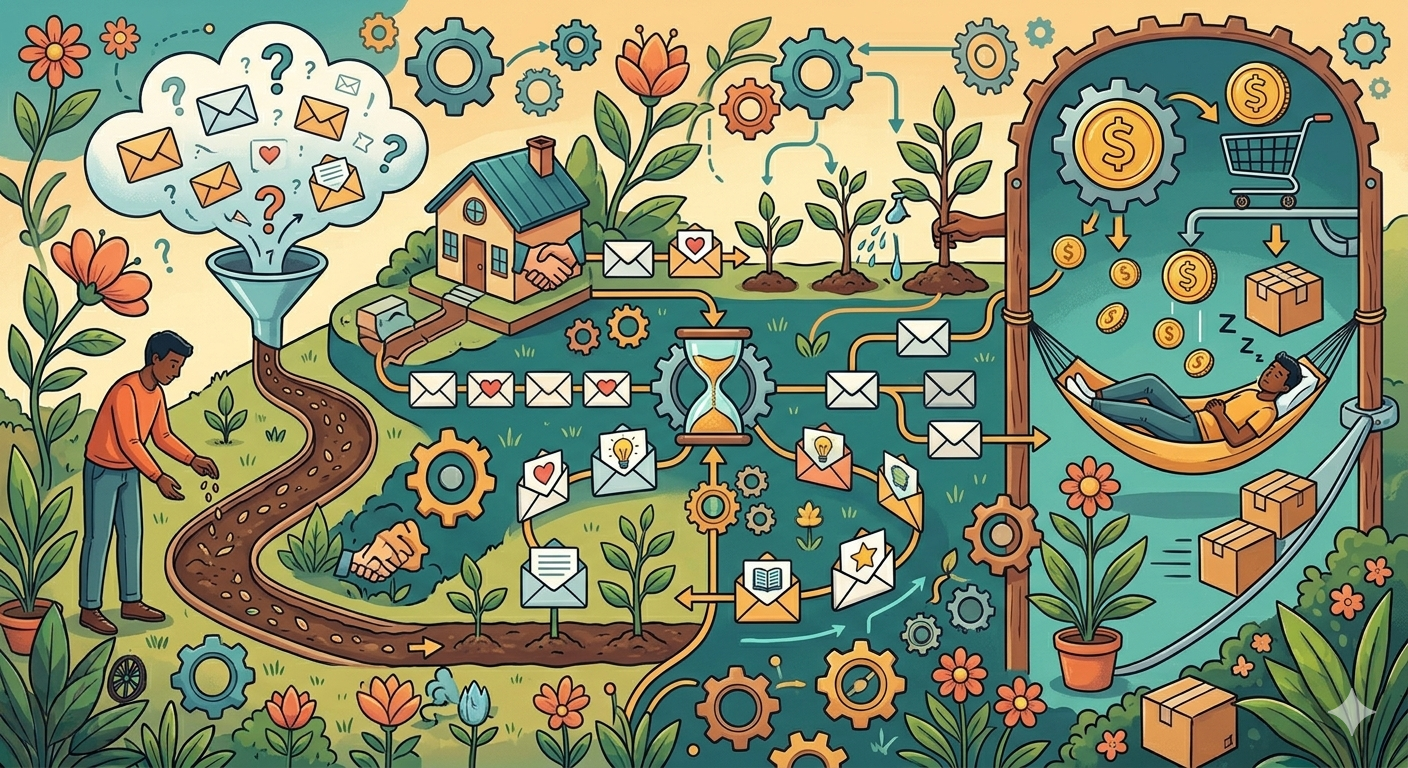
An email sequence is one of the most powerful assets your business can own. Set it up once with genuine care, and it works for you every single day — quietly, consistently, and beautifully.
emailmarketingzone.esApril 2025~6 min read
Behind every thriving online business, there is almost always a secret weapon that runs silently in the background — unseen, unthanked, and absolutely relentless in its effort. That weapon is a well-built email sequence. A series of carefully crafted messages, sent automatically in the right order, to the right person, at the right moment in their journey with you.
If you have ever received an email that felt so perfectly timed and so genuinely relevant that you stopped and thought, «how did they know I needed this right now?» — that was a sequence. And you can have one too. Starting today.
What makes a sequence different from a campaign
A campaign is a single email — or a broadcast — sent to your entire list at once. It is powerful for announcements, promotions, and newsletters. But it treats everyone the same, regardless of where they are in their relationship with you.
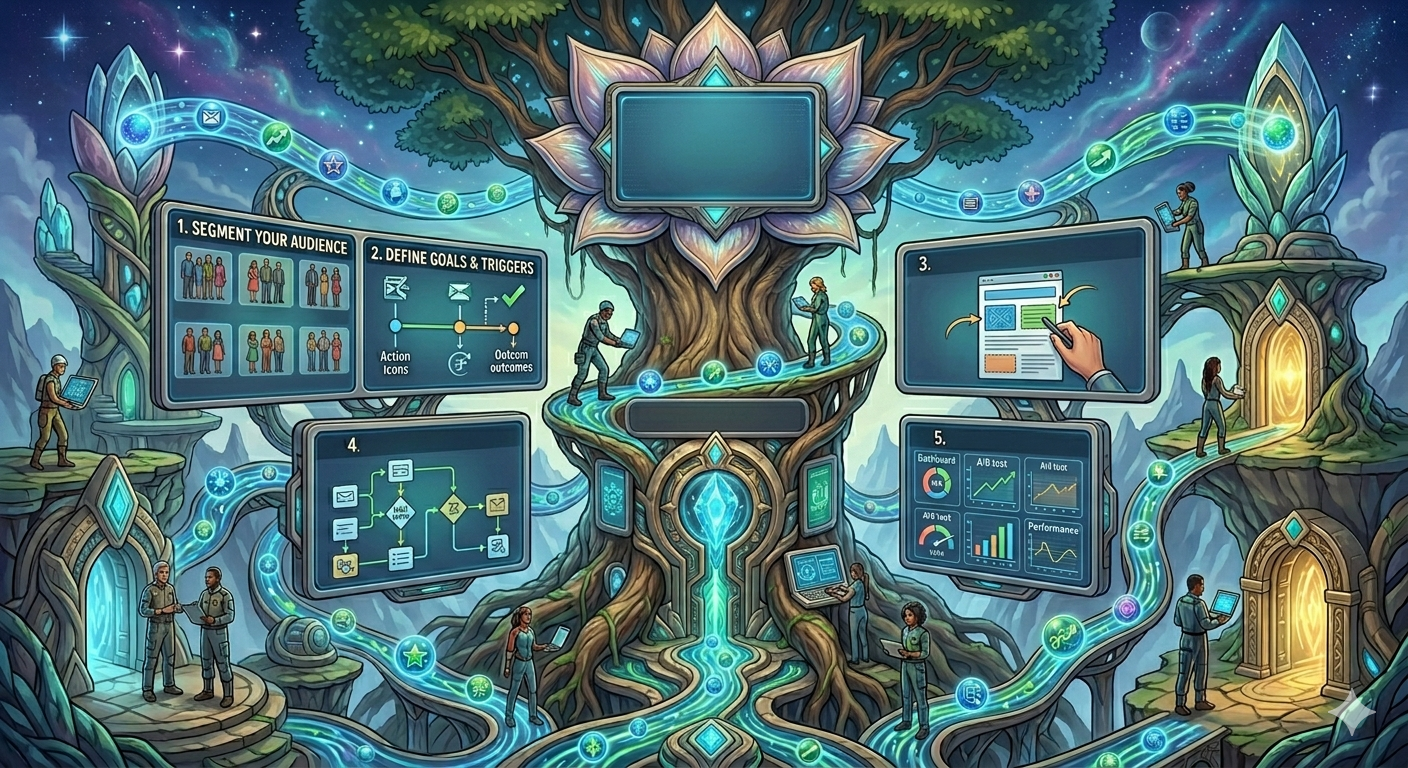
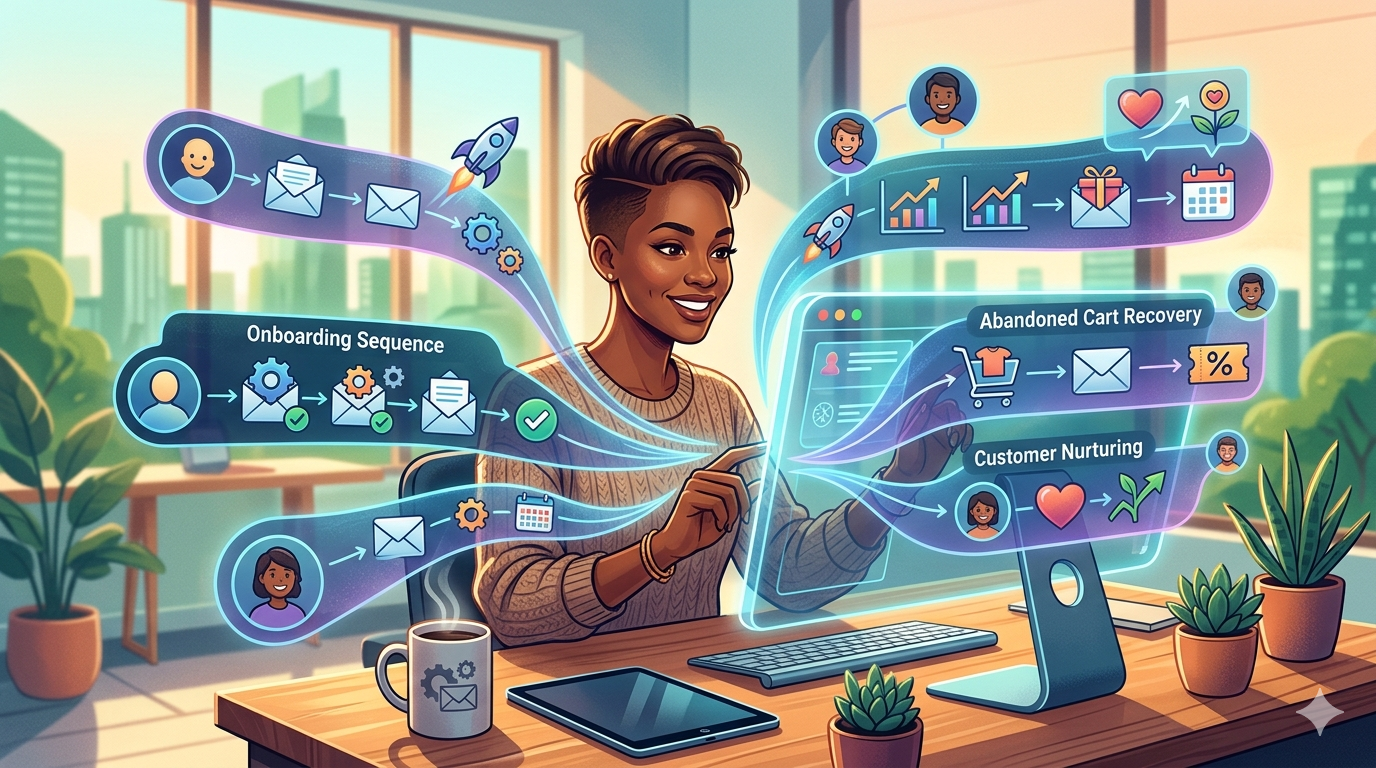
A sequence is different. It is a personalised journey — a series of emails triggered by a specific action, designed to meet the subscriber exactly where they are and guide them somewhere better. A new subscriber gets a different sequence than a paying customer. Someone who clicked your pricing page gets a different sequence than someone who downloaded a free guide. Every path is intentional. Every email earns its place.
The anatomy of a powerful email sequence
Every great sequence — regardless of its goal — shares the same underlying structure. Understand this structure and you can build any sequence for any purpose.
T
The Trigger — what starts everything
A specific, intentional action that tells your platform: this person needs this sequence now. A form submission, a purchase, a link click, a tag applied, a date reached. The trigger must be precise. Imprecise triggers send the wrong message to the wrong person — and nothing destroys trust faster.Examples: signup, purchase, click, date
1
Email 1 — the hook and the promise
Sent immediately or within minutes of the trigger. This is your first impression in this specific journey. Deliver whatever was promised, set expectations for what comes next, and establish a warm, personal tone. The goal is simple: make them glad they are here and eager to open the next one.Highest open rates — make it count
2
Emails 2–3 — the value and the trust
These are the heart of your sequence. No pitching. No selling. Just genuine, useful, generous content that makes the subscriber’s life better. Stories that create connection. Insights that build credibility. Questions that invite conversation. This is where lasting trust is forged — and where most businesses give up too soon.Give more than they expect
4
The pivot — introducing your offer
After building genuine trust, you have earned the right to make an ask. Introduce your product or service as a natural next step — not as a desperate pitch, but as a confident invitation. «Here’s how we can go deeper together.» One offer. One link. One clear call to action. Nothing more.Only after real value is delivered
5
The follow-up — objection and urgency
For subscribers who received the offer but did not act, a thoughtful follow-up addresses the most common doubts — price, risk, timing, relevance — and adds a gentle reason to act now. Not manufactured panic. Real urgency: a deadline, a limited bonus, a cohort closing. This email alone can double your conversion rate.Addresses hesitation honestly
∞
After the sequence — the ongoing relationship
Once the sequence ends, subscribers move into your regular newsletter or another relevant automation. The journey does not stop — it evolves. A subscriber who did not buy this time may buy next quarter, when the timing is finally right for them.Tag and segment for next steps
«A sequence is not a funnel you push people through. It is a relationship you build, one honest email at a time.»
Getting the timing right
One of the most overlooked aspects of email sequences is spacing. Too close together and you feel intrusive, even aggressive. Too far apart and you become a stranger by the third email. Here is a proven framework for most sequence types:
| Sequence type | Recommended spacing | Why it works |
|---|---|---|
| Welcome sequence | Day 0 → Day 2 → Day 5 | Frequent enough to build momentum while the subscriber is engaged and curious |
| Nurture sequence | Day 0 → Day 3 → Day 7 → Day 14 | Gives busy people time to breathe while staying consistent over two weeks |
| Abandoned cart | 1hr → 24hrs → 48hrs | Catches them while the intent is fresh, then gives space before the final push |
| Post-purchase | Day 0 → Day 3 → Day 10 | Celebrates the purchase, then checks in after they have had time to use the product |
| Re-engagement | Day 0 → Day 5 | Two honest attempts, then a clean goodbye — respects their time and your reputation |
Writing emails that people actually want to open
The structure is important. The timing matters. But ultimately, the thing that makes or breaks any sequence is the writing. And the most common mistake is treating automated emails like system messages — stiff, impersonal, and painfully forgettable.
Here is a simple formula for every email in your sequence:
Subject line
Curiosity + Relevance
Make them wonder. Make it clearly about them. Never clickbait — always deliver on the promise.
Opening line
Hook in one sentence
The first sentence must earn the second. Start with a story, a bold statement, or a question they cannot ignore.
Body
One idea, explored fully
Resist the urge to say everything. One email, one idea, one emotion. Focus is the most underrated skill in email marketing.
Call to action
One link, one ask
Tell them exactly what to do next. Make it feel like the obvious, natural next step — not a demand.
The pre-launch checklist
Before you activate any sequence, run through this checklist. It takes ten minutes and will save you from the kind of embarrassing mistakes that are almost impossible to fix once they are in the wild.
- ✓Sign up yourself using a personal email address and complete the entire sequence from a subscriber’s perspective
- ✓Check every single link in every email — broken links in automated sequences can go unnoticed for months
- ✓Confirm that personalisation fields (first name, etc.) display correctly and have sensible fallback defaults
- ✓Test on both desktop and mobile — more than 60% of emails are now opened on a phone
- ✓Verify that the trigger fires correctly and only for the intended audience segment
- ✓Make sure subscribers who complete this sequence are tagged or moved appropriately for their next journey
The most common mistake: Building a long, complex sequence before ever testing a simple one. Start with three emails. Run it for 60 days. Measure what works and what does not. Then expand. Complexity should be earned through data — not assumed from the beginning.
Your sequence is a living thing — treat it that way
The biggest misconception about email sequences is that once you build them, you are done. You are not. The best sequences in the world get reviewed, refined, and improved on a regular cadence — quarterly at minimum. Your business changes. Your offers evolve. Your audience grows. Your sequences must grow with them.
Set a calendar reminder for three months from now. Go back to your sequence. Read every email with fresh eyes. Look at the open rates, the click rates, the drop-off points. Ask yourself honestly: is this still the best version of this sequence? Is it still true to who we are and what we offer?
If the answer is no — rewrite it. Without guilt, without hesitation, and with the knowledge that every improvement you make will compound quietly in the background for months to come.
Your subscribers deserve your best thinking. Give it to them — once, in a sequence that runs forever. That is the real magic of email marketing done right.