






EmailMarketingZone.es · April 2026 · 7 min read
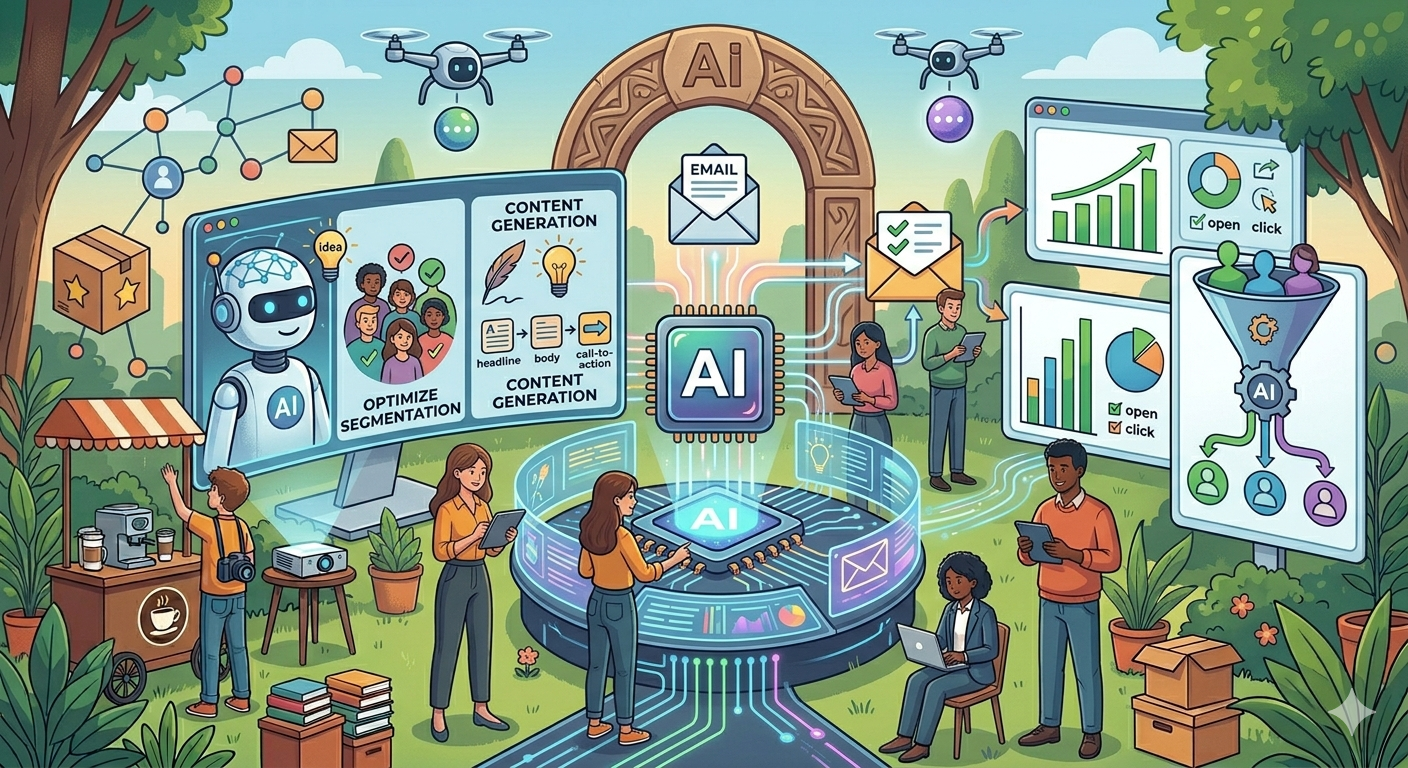
Traditional email segmentation is a blunt instrument. You divide your list by age bracket, by purchase date, by geographic location — and then you send the same email to everyone who fits the category. It works well enough that most marketers stick with it for years. But it misses something fundamental: the difference between two subscribers who share the same demographic profile but behave completely differently, want different things, and respond to different messages.
AI segmentation does not divide your list into broad groups. It builds an individual understanding of each subscriber — and that changes everything.

What AI Segmentation Actually Does
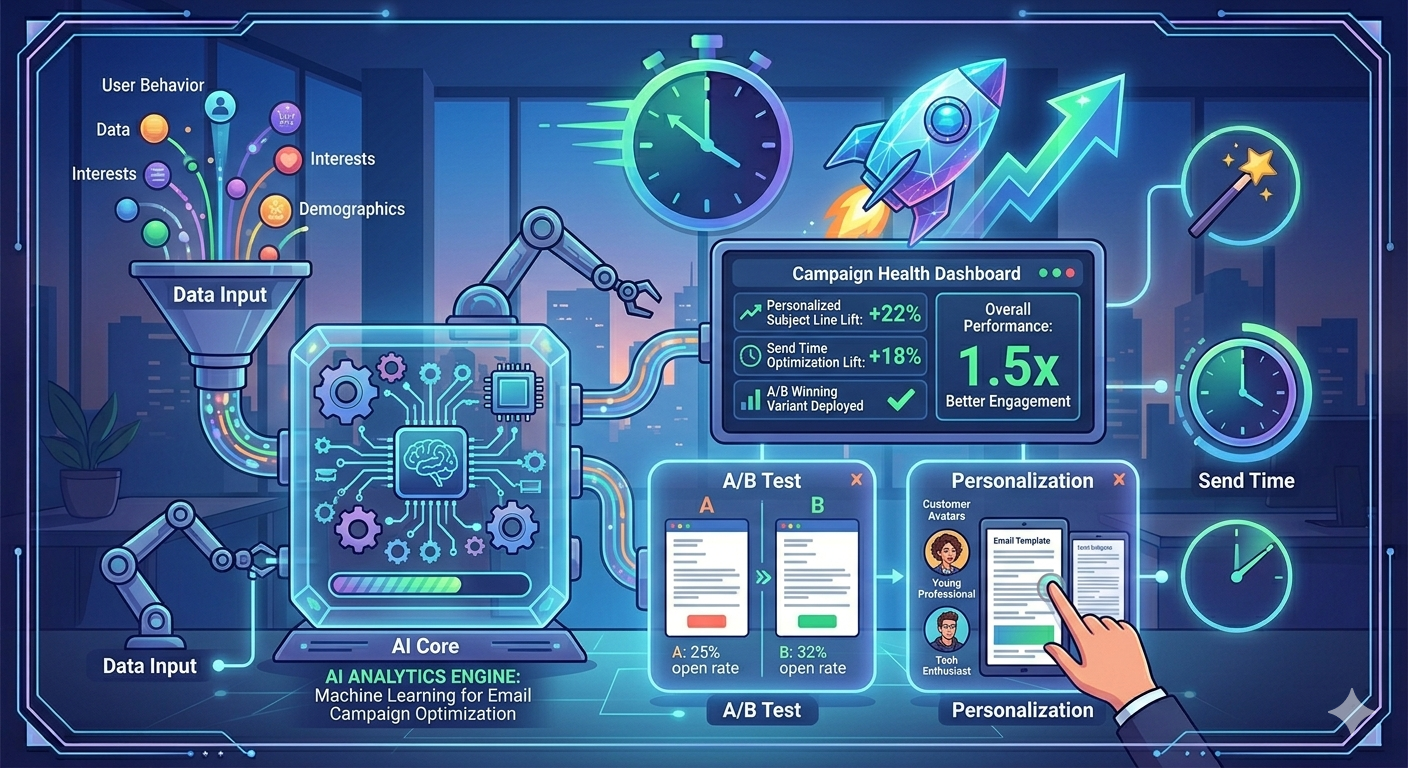
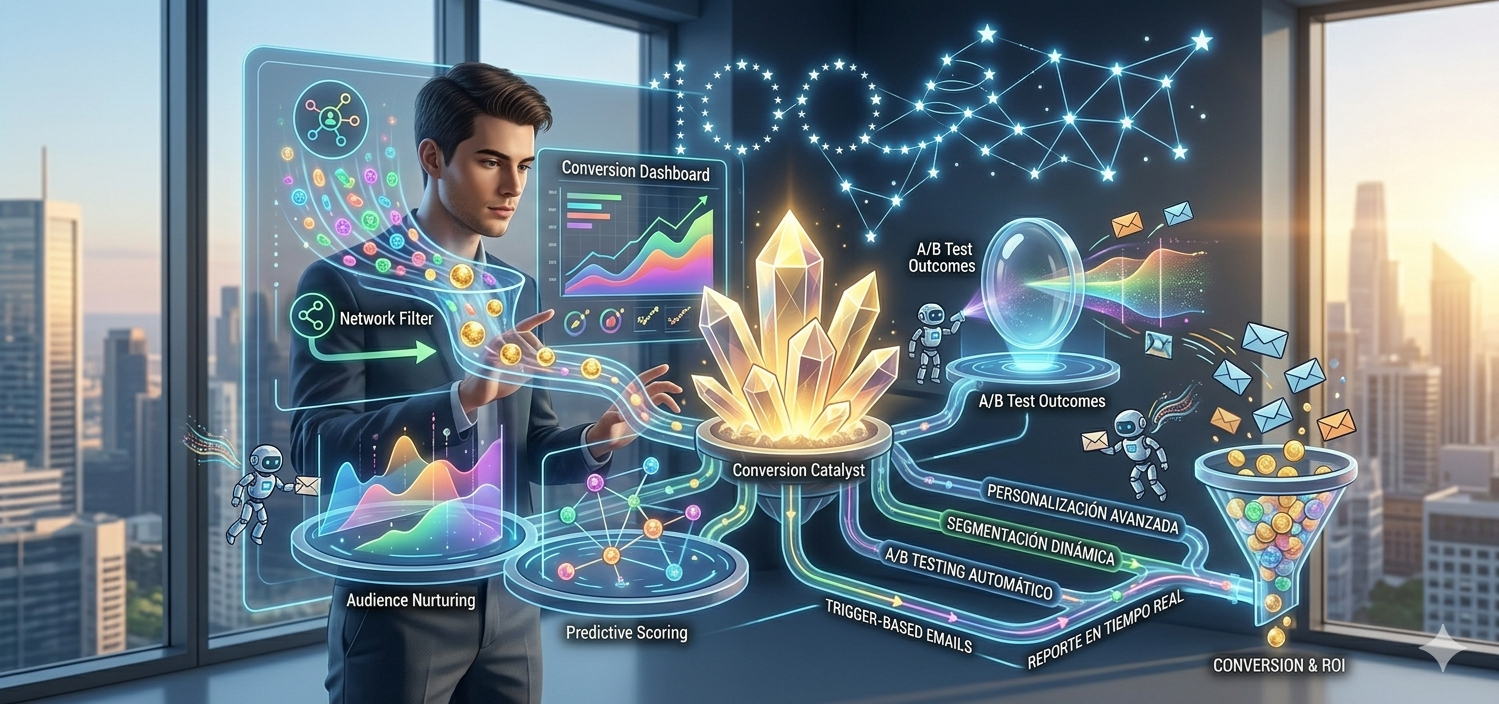
AI segmentation analyzes behavioral data across multiple dimensions simultaneously: email open history, click patterns, purchase behavior, website browsing, time-of-day engagement, product category interest, recency, frequency, and monetary value. It identifies patterns in this data that predict future behavior — purchase probability, churn risk, lifetime value, optimal messaging approach — and uses those patterns to group subscribers in ways that are infinitely more nuanced than any manually created segment. A subscriber might be classified simultaneously as «high lifetime value,» «at churn risk,» «responds best to educational content,» and «most likely to engage on weekends» — a combination of attributes that would be impossible to identify and act on manually.
The Best Platforms for AI Segmentation
Klaviyo — Predictive Segmentation for Ecommerce
Klaviyo’s AI predicts customer lifetime value, next purchase date, purchase probability, and churn risk for each subscriber individually. These predictions are updated continuously as new behavioral data comes in, meaning your segments are always reflecting the current reality of your list rather than a static snapshot from when you last built them manually. Ecommerce brands using Klaviyo’s predictive segments consistently report significant improvements in campaign ROI compared to their previous demographic segmentation approach.
ActiveCampaign — Behavioral Automation and Lead Scoring
ActiveCampaign’s AI scores leads based on accumulated behavioral signals and automatically moves subscribers between segments as their score changes. A cold prospect who suddenly visits key pages, downloads content, and opens multiple emails can trigger enrollment in a more aggressive nurture sequence automatically — without any manual intervention. This dynamic segmentation means your most interested subscribers always receive the most relevant, timely messaging regardless of how recently they joined your list.
HubSpot — CRM-Powered AI Segmentation
HubSpot’s AI segmentation draws on CRM data that most email platforms cannot access — deal stage, sales activity, company size, technology stack, recent conversations with sales representatives. This makes its segmentation uniquely powerful for B2B companies, where the right message depends not just on email behavior but on where a prospect is in a complex, multi-stakeholder buying process.
Building Your AI Segmentation Strategy
The most impactful AI segments for most businesses are engagement-based segments (highly engaged versus dormant subscribers), purchase behavior segments (buyers versus browsers, repeat purchasers versus one-time buyers), and predictive segments (high churn risk, high purchase probability in the next 30 days). Start with these three categories and build additional segments as your data and confidence grow. Resist the temptation to create dozens of complex segments before you have tested whether simpler ones work — the most valuable segmentation is the one you actually use consistently.
The Data Quality Requirement
AI segmentation is only as good as the data it draws on. A list with inconsistent, incomplete, or outdated data will produce unreliable AI-generated segments. Before implementing AI segmentation tools, invest in data quality: verify email addresses, standardize data fields, connect your email platform to your ecommerce or CRM system to enrich subscriber profiles, and implement consistent tagging practices that give the AI meaningful behavioral signals to learn from.
Key insight: AI segmentation is not a one-time setup. The most powerful AI segments continuously update as subscriber behavior evolves — meaning the segment you created six months ago reflects your subscribers today, not who they were when you first built it. This dynamic quality is what makes AI segmentation dramatically more effective than static manual lists over time.
Segmentation Is the Foundation
Every other email marketing improvement — better copy, smarter send times, more compelling offers — delivers its maximum impact only when it reaches the right audience. AI segmentation ensures that the right subscriber receives the right message at every point in their relationship with your brand. It is not the most visible improvement you can make to your email program. But it is often the most valuable one.AI Tools for Email Segmentation in 2026